Sunday, 11 November 2012

Remembrance


I don't normally post just to bump up past entries, but on this Remembrance Day, I think it's worth pointing to a couple of posts just in case you missed them first time around:-


And here are highlights from services around the world


Saturday, 10 November 2012

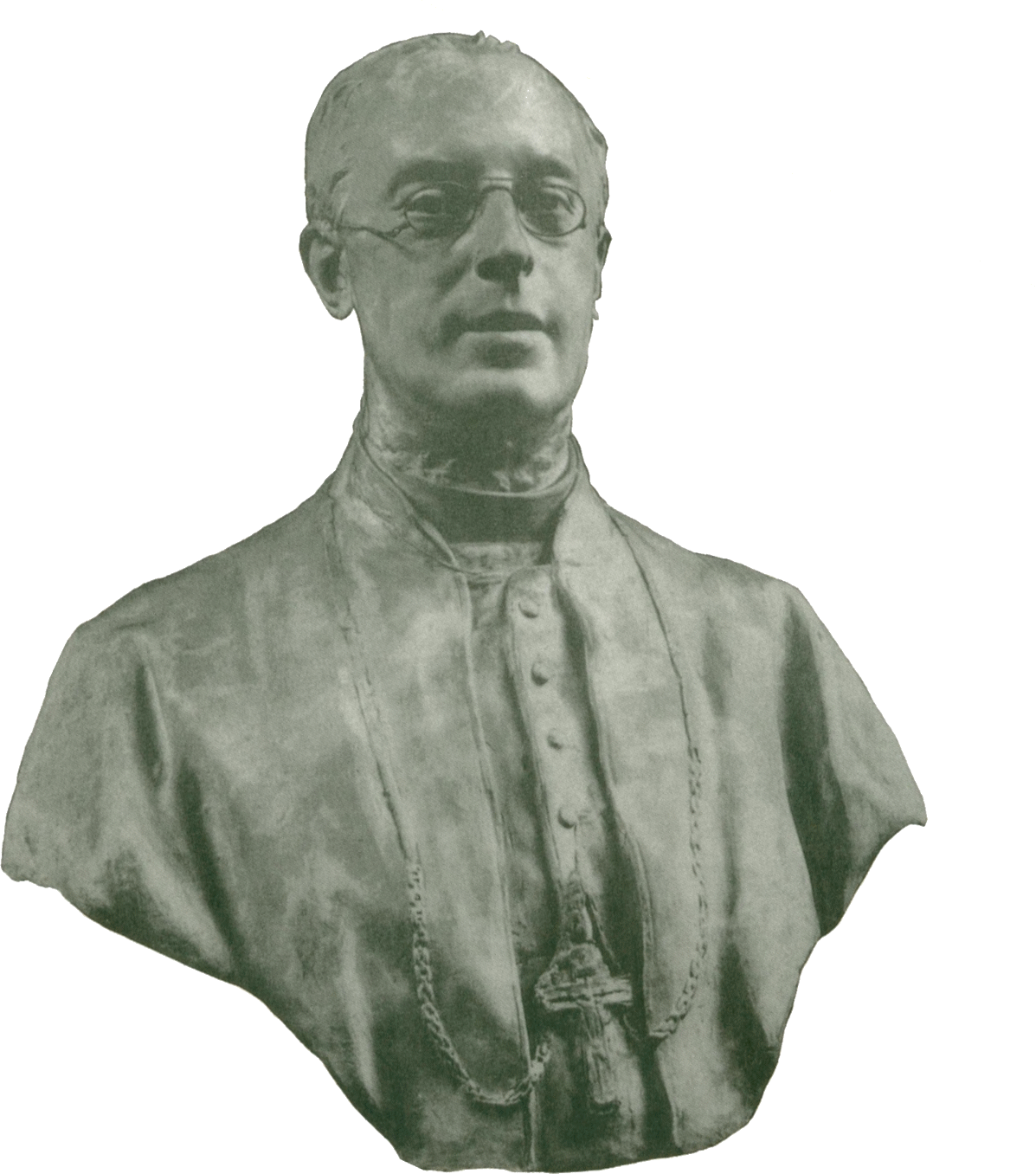
Bishop Casartelli of Salford

Louis Charles Casartelli, Bishop of Salford
Louis Charles Casertelli was born in the Cheetham area of Manchester on 14 November 1852 the eldest child of Joseph Casartelli, an optician, who had come to England in 1834 from Tavernerio near Lake Como.  Casartelli elder had established a family firm of scientific instrument manufacturers and was a friend of the Manchester physicist James Joule.

Louis was the second child to enroll  at the Salford Catholic Grammar School, where he shone, it being said of him that he 'was as wax to receive and marble to retain'.  He had a particular talent for languages - he is supposed to have set himself to learn Flemish, 'as there was nothing else to do one afternoon'.  By the time he entered the seminary at Ushaw, he was fluent in French, German, Italian, Spanish and Flemish.  At Ushaw he won the Gold Medal for Classics and was awarded an MA degree externally from London University.  He then went on the Catholic University of Louvain where, along with his theological studies, he specialised in Eastern languages.

He was ordained priest by Bishop Vaughan of Salford (later Cardinal Archbishop of Westminster) in September 1876 and was attached to the teaching staff of St Bede's College, Manchester (becoming rector of the college in 1891).  In 1884 he gained a doctorate in Oriental Literature from Louvain.  He lectured at Louvain and Manchester University on Iranian languages and was offered a post at Oxford University (though was prevented from accepting it by the hierarchy).

When he was nominated for the vacant see of Salford in 1903, he wrote to Cardinal Vaughan and traveled to Rome in a futile attempt to decline the post.  During his episcopate confessions went up by over 50%; there were 90 additional priests, 24 new parishes, 14 secondary and central schools and 7 new religious communities.

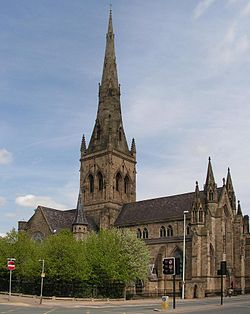
Cathedral Church of St. John the Evangelist, Salford
He stood out as an intellectual at a time when it was often felt that Catholics came from poorly-educated stock.  Vaughan saw the need for someone of his intellectual ability and vision at a high level in the Church in England. He was founder and president of the Manchester Dante Society and the Manchester Egyptian Association, the president of the Manchester Statistical Society and a supporter many other societies. In 1918 he was elected an Honorary Member of the Royal Asiatic Society.

During the First World War, he worked on the behalf of Belgian and other refugees, and was later instrumental in the rebuilding of the library and collections of the University of Louvain, which had been destroyed during the war.  He was a correspondent of the the Prefect of the Vatican Library, Cardinal Ratti (later Pope Pius XI), hosting his visit to England and introducing him to British academic libraries.

Bishop Casartelli suffered from poor health - he wintered every year at Westcliffe-on-Sea, almost inevitably catching bronchitis.  He died at Bishop's House, Salford, on 18 January 1925 at the age of 73 and is buried in Moston Cemetery, Manchester.

This Week's Interesting Obits

Reis Leming, pictured amid the aftermath of the 1953 floods at Hunstanton.
Ries Leming, GM

No obits that caught my interest this week - the press haven't caught up with the death of Ries Leming last weekend yet.


There's an article here by Harry de Quetteville, the Obits Editor of the Daily Telegraph about life and death on the Obits Desk.  Naturally, they have a new book of Telegraph obits out for Christmas.

Friday, 9 November 2012

Books and Stuff

A weekly round-up of my book news.

What I've been reading...

Carrying on with Darwin's Armada. I've really quite enjoyed reading about Hooker and Huxley - I must dig out a book on the Ross expedition.

On the fiction front, I've carried on with The Voyage of the Space Beagle and started Jim Butcher's Grave Peril, another from the Dresden Files.


First appearance of the short story
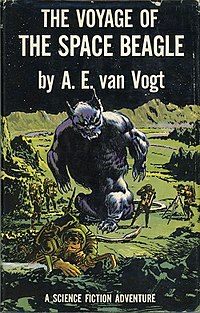
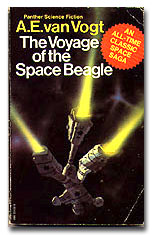
As my post on retrofuturism proved so popular, I thought I'd share some covers from old editions of The Voyage of the Space Beagle.

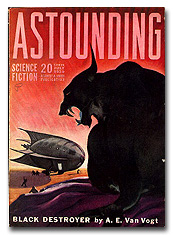
The book, which was first published in 1950, was a 'fix-up' of a number of short stories, the first of which - 'Black Destroyer' - appeared in Astounding Science Fiction for July 1939.  One of the stories was allegedly the inspiration for Alien, and van Vogt got a pay-off from 20th Century Fox after threatening to sue.

Lots more versions of the cover here.

First edition of the novel


The less interesting (to me) 1977 version I own.


What I've bought...

Gail Carriger, Souless - 30p
Stieg Larsson, The Girl With the Dragon Tattoo - 30p
Leon Tolstoy, War and Peace - £1.75

Siegfried Sassoon, The War Poems - 95p

Herodotus, Snakes with Wings and Gold-Digging Ants - 95p

Bernard Ireland, The Fall of Toulon - £1.99
Paul Jordan, The Atlantis Syndrome - £1.99
Marilyn B. Ogilvie, Searching the Stars: The Story of Caroline Herschel - £1.99


And finally...

I've been introduced to goodreads.com.  By me listing the books I own and rating those I've read they've produced some interesting recommendations for me to look out for.  I've also been 'befriended' by one of the authors I've rated, which is an interesting situation!

Thursday, 8 November 2012

A Word in Support of Movember


November is Movember - a campaign encouraging the growing of moustaches during the month to raise awareness of prostate cancer and other male health initiatives.  "Movember aims to fulfil its vision of having an everlasting impact on the face of men’s health, by continuing to spark conversation and spread awareness of men’s health each year."

The movement started in Melbourne, Australia (where else!), in 2004 and is now world-wide. 

The rules are simple:
Once registered at movember.com each Mo Bro must begin the 1st of Movember with a clean shaven face. For the entire month each Mo Bro must grow and groom a moustache. There is to be no joining of the mo to the sideburns (that’s considered a beard), there’s to be no joining of the handlebars to the chin (that’s considered a goatee) and each Mo Bro must conduct himself like a true gentleman.
Sam
The funds raised in the UK are directed to programmes run directly by Movember and their men’s health partners, Prostate Cancer UK and the Institute of Cancer Research - elsewhere the causes include battling depression, which as we know is a major male health issue.

I'm not taking part, but I'm supporting Sam King and his team, who are.  This is a good cause - find out more about the UK campaign here (or use Google to find something country-specific) and please do consider making a donation.

Wednesday, 7 November 2012

Royals in Medals #5: The Duke and Duchess of Kent

HRH The Duke of Kent, KG, GCVO. GCMG

Edward George Nicholas Paul Patrick, was born in London on 9 October 1935.  He was the eldest child of Prince George, Duke of Kent (the younger brother of King George VI and King Edward VIII) and Princess Marina, the daughter of Prince Nicholas of Greece. He has two younger siblings: Prince Michael of Kent and Princess Alexandra.  At birth he was seventh in line to the throne, and as the grandson in the male line of a monarch, was granted the style of Prince and Royal Highness: he succeeded to the title Duke of Kent on the death of his father on active service in 1942.

He was educated at Eton and La Rosary in Switzerland and then entered the Royal Military Academy, Sandhurst , where he won the Sir James Moncrieff Grierson prize for foreign languages and qualified as an interpreter of French.  He was commissioned as a second lieutenant in the Royal Scots Greys in 1955. In 1970 he commanded a squadron of his regiment serving in Cyprus  as part of the UN peacekeeping force.  The Duke retired from the Army in 1976 with the rank of Lieutenant-Colonel.  He was subsequently promoted to Field Marshal in June 1993.

The Duke has been a very active member of the Royal Family, holding many patronages.


Honorary Military Appointments

United Kingdom
Canada


The Duke holds the honorary ranks of Field Marshal in the Army and Air Chief Marshal in the RAF

In the robes of the Order of St Michael and George

Orders, Decorations and Medals 

Orders
  
 
Order of the Garter
Royal Knight, 1985


Royal Victorian Order
Knight Grand Cross (GCVO), 1960


Order of St Michael and St George
Knight Grand Cross (GCVO)
Grand Master of the Order from 1967


Campaign Medals

  United Nations Medal (UNFICYP)

Commemorative Medals

File:GeorgeVICoronationRibbon.png King George VI Coronation Medal, 1937
Queen Elizabeth II Coronation Medal 1953  
File:Queen Elizabeth II Silver Jubilee Medal ribbon.png  Queen Elizabeth II Silver Jubilee Medal 1977
Queen Elizabeth II Golden Jubilee Medal ribbon.png  Queen Elizabeth II Golden Jubilee Medal 2002
QEII Diamond Jubilee Medal ribbon.png  Queen Elizabeth II Diamond Jubilee Medal 2012


The Duke represented the Queen during independence celebrations in several former colonies.  He holds the following commemorative medals


He may hold the following

Uganda Independence Medal, 1963, and medals issued to mark Gambia's Independence and Ghana's 50th Independence Anniversary Celebration

Long Service Awards

CD-ribbon.png  Canadian Forces Decoration (CD), with two clasps

Foreign Awards


Duchess of Kent and Family

The Duke and Duchess at the Hovingham Hall reception following their wedding on June 8, 1961.
The Duke of Kent married Katharine Worsley, only daughter of Sir William Arthrington Worsley, Bart, on 8 June 1961. 

They have three children, none of whom carries out royal duties:
  • George, Earl of St Andrews, born 26 June 1962
  • Lady Helen Taylor, born 28 April 1964
  • Lord Nicholas Windsor, born 25 July 1970
Following decades of ill-health, the Duchess does not undertake royal duties, and lives separately from her husband.  For many years she taught music to primary children.

The Duchess converted to Roman Catholicism in 1994, though this did not affect the Duke's place in the line of succession due to the Act of Settlement 1701, in that she was an Anglican at the time of their marriage. The couple's son Lord Nicholas also converted, loosing his right of succession to the throne.

Honorary military appointments

The Duchess holds the honorary rank of Major-General.

Orders, Decorations and Medals

Orders

Royal Victorian Order
Dame Grand Cross (GCVO), 9 June 1977 (Queen Elizabeth's Silver Jubilee)


Royal Family Order of Queen Elizabeth II,1969
Commemorative Medals


File:Queen Elizabeth II Silver Jubilee Medal ribbon.png  Queen Elizabeth II Silver Jubilee Medal 1977
Queen Elizabeth II Golden Jubilee Medal ribbon.png  Queen Elizabeth II Golden Jubilee Medal 2002
QEII Diamond Jubilee Medal ribbon.png  Queen Elizabeth II Diamond Jubilee Medal 2012


Tuesday, 6 November 2012

Retrofuturism - The World of Tomorrow, Yesterday!


While working as a Google-drudge for The Wife - she is moving on from Steampunk and now wants to explore Dieselpunk - I discovered a new genre 'Atompunk', and found a nice blog, the Dark Roasted Blend.  It could be about coffee, but it's not.  According to its strap-line, it's focused on 'weird and wonderful things', but what appeals to me is it's strong streak of retrofuturism.  From there, we get to Dreams of Space, 'non-fiction children's books about space flight from 1945-75'.

I'm off for a good browse...


A little while ago, I complained that the UK distributor of Hydra Miniatures had run out of their 28mm Robot Legion figures.

This week I was pleased when a parcel arrived (what over on the British Medals Forum is termed 'the Jiffy Bag Dance') and out popped 'Opito'.  Now I want to find someone who does the guys in the top photo!

Sunday, 4 November 2012

Edward Stanley, Bishop of Norwich

Edward Stanley D.D.
Bishop of Norwich
n. 1780 ob. 1849

Edward Stanley, was born in London on 1 January 1779, the second son and seventh child of Sir John Thomas Stanley, sixth baronet, of Alderley Park, Cheshire, and  his wife Margaret Owen (a Welsh heiress).  His elder brother, John Thomas, was first Baron Stanley of Alderley, and father of Edward John Stanley, second Baron Stanley and first Baron Eddisbury.

Edward's initial hopes were to enter the Royal Navy, but his family refused to allow that.  Accordingly, he was educated at St John's College, Cambridge and ordained in 1802.  In 1805 the family patronage was used to appoint him Rector of Alderley, a post he held until his appointment as Bishop of Norwich in 1837.  Here he took a great interest in the schools in his parish and the Church's social role: founding temperance societies, mechanics' institutes, and statistical societies.

He was an active naturalist, publishing A Familiar History of Birds, their Nature, Habits, and Instincts in 1836 and studied geology.  He was elected an Fellow of the Royal Society and President of the Linnean Society.

Norwich Cathedral

In 1837 he was nominated by Lord Melbourne to the Bishopric of Norwich, vacant by the death of the notoriously indolent Bishop Bathurst.  Here he proved himself an energetic bishop in the new Victorian mold - plurality was clamped down on and ecclesiastical discipline enforced.  He had 173 new parsonages built, doubled the number of schools and rendered them more efficient. The examinations for ordination were carefully conducted, and Stanley made himself personally acquainted with the previous career of every candidate.

He was a frequent attendee of the House of Lords, frequently speaking in support of Whig policies, such as Catholic relief, toleration of dissenters and, notably, the ragged school movement.  His political liberalism put him at odds with his diocese, but he was held in high personal regard.


In August 1849 he started for a tour in Scotland with his wife and daughters. At Brahan Castle in Rosshire he was taken ill, anddied from congestion of the brain on 6 September 1849.  His body was brought by sea from Invergordon to Yarmouth, and was buried in the nave of Norwich Cathedral, which also has a fine window in his memory.  The last time I saw it, his memorial was hidden by stackable chairs and the debris of modern worship.

Family

Stanley married Catherine (1792-1862), eldest daughter of the Revd Oswald Leycester in 1810.  They had had five children; Owen, Mary, Arthur, Charles and Catherine, each one of whom is of interest in their own right.

STANLEY OWEN H.m.s. Terror, Nipped By The Ice, In Fox's Channel.
HMS Terror in the ice, by Owen Stanley

Owen Stanley (1811-1850) was an officer in the Royal Navy and noted explorer.  He spent four years as a midshipman surveying South America, 1826-30, and was a Lieutenant on HMS Terror, during its 1836-37 expedition to the northern part of Hudson Bay. The ship barely survived the winter, at one point being forced 40 ft up the side of a cliff by the ice. In the spring of 1837 an encounter with an iceberg further damaged the ship, which was in a sinking condition by the time the captain was able to beach the ship on the coast of Ireland at Logh Swilly.

In 1846 Owen sailed for Australia as captain of HMS Rattlesnake, with the purpose of surveying the seas around the Great Barrier Reef and Torres Strait.  Junior naturalist on the ship was T.H. Huxley, soon to be known as 'Darwin's Bulldog'.  The bishop, as President of the Linnaean Society, was instrumental in having Huxley's early papers published. Owen would send cases of bird and shell specimens back home, where the family would assemble in the front hall of the palace to open the treasure chest, and would marvel at a little oppossum in a bottle. Owen died on his ship in 1850 and was buried in Sydney.

Mary Stanley (1813-1879) worked to support poor women.  She had a home in Norwich for factory girls and trained them in the production of lace.  In 1854, she went to the Crimea in charge of fifty nurses under Florence Nightingale.   In 1856 she converted to Catholicism, in the second wave of 'Puseyite perversions'.  She worked closely with Henry Edward Manning, continued with her philanthropic work, establishing savings clubs, an industrial laundry and creating employment for soldiers' wives in the production of army uniforms. During the Lancashire 'cotton famine' of 1861she helped Mrs Gaskell distribe aid to the unemployed weavers.

Arthur Penrhyn Stanley (1815-1881) became Dean of Westminster, and will almost certainly earn a 'Dead Bishops' blog entry of his own.

Charles joined the Royal Engineers, and was stationed at Hobart, Tasmania (then Van Diemen's Land). He died suddenly in 1849 from gastroenteritis - he, his father and his brother Owen all died within eight months of each other.

Catherine Maria married the Revd Charles John Vaugham, headmaster of Harrow School and Dean of Llandaff. She died in 1899.

So Much To Do, So Little Time...

https://blogger.googleusercontent.com/img/b/R29vZ2xl/AVvXsEjXznFem-fwuxFsNj___ZJ5GqaGLTYn5_or5QG0KecssP_tLNFxbgikN-EDOFn9HYwBEmSxcWfUMdkLlLB1Cp3YjsbGnojaf_MgEiYlPLCxcAxE59sohUpD3D8tTAOwkP9ZKdhJomQswUH6/s1600/BRITAIN_2388153b.jpg

The Daily Telegraph is reporting on a new book by Stuart Laycock, All the Countries We've Ever Invaded: And the Few We Never Got Round To.

In it Laycock has worked his way around the globe, through each country alphabetically, researching its history to establish whether, at any point, they have experienced an incursion by Britain  He claims that of the 200 countries, only 22 haven't had some sort of attack by British forces.

Those (as yet) untouched are
  • Andorra
  • Belarus
  • Bolivia
  • Burundi
  • Central African Republic
  • Chad
  • Congo, Republic of
  • Guatemala
  • Ivory Coast
  • Kyrgyzstan
  • Liechtenstein
  • Luxembourg
  • Mali
  • Marshall Islands
  • Monaco
  • Mongolia
  • Paraguay
  • Sao Tome and Principe
  • Sweden
  • Tajikistan
  • Uzbekistan
  • Vatican City

Royals in Medals - Prince Charles Interim Report

It will be a while before I do a proper Royals In Medals entry on Prince Charles and the Duchess of Cornwall, if only because of their complexity.  However, I think it worth noting a development during their current tour of Papua New Guinea.

Prince Charles has received the Grand Companion of the Order of Logohu and Camilla the Grand Companion of the Order of the Star of Melanesia.  As we've already seen, the Orders were established in 2005, with Princess Anne being the first recipient of the Order of Logohu (at the same time Sir Timothy Lawrence was the first recipient of the Order of the Star of Melanesia).

The gentleman with them is Papua New Guinea's Governor General, Sir Michael Ogio, GCMG, CBE - he's also wearing insignia of the Order of Logohu as well as his GCMG star.

See here for more on the PNG honours system


Saturday, 3 November 2012

Laika - A True Pioneer

Laika - Space Pioneer

Today is the anniversary of the 1957 launch of Sputnik 2, which carried the first living being into orbit a mere month after the launch of Sputnik 1, the world's first artificial satellite.  This was more by accident than design.  Following the successful launch of Sputnik 1, Premier Khrushchev contacted the space programme's Chief Designer, S.P. Korolev, and the demanded a 'spectacular' in order to mark the 40th anniversary of the October Revolution - only three week's away!

Accordingly, on 9 October, Pravda declared that "The Soviet Union will launch a sputnik carrying animals as passengers.  Detailed observations will be made of their behaviour".
Sputnik 2 was a rough-and-ready adaption of Sputnik 1, adding a container used in the geophysical flights of the previous year and added a cosmic ray detector (the flight produced significant data on the Van Allen Belt).

Whereas NASA preferred to use experimental apes in its space programme, the Soviet Union used dogs - it had a history of utilising them in research going back beyond the physiologist Pavlov.  There was a whole series of 'space dogs' used throughout the 1950s and 60s.

Laika (the name translates as 'Barker' but is a Russian name for a type of small dog) was a mongrel bitch.  She had been a stray in Moscow when captured and was selected for the mission because of her even temperament.  Her trainers nicknamed her Kudryavka ('Little Curly'), and she was generally referred to in the American press as 'Curly'.  Training included confinement in small spaces, sessions in centrifuges and the simulation of loud noises and vibration.  There is no doubt that this caused severe discomfort to the space dogs (as was also the case with the apes used NASA and other animals sent into space).

Statute of Laika in Star City

Officially, Laika suffered no ill-effects during the flight and died a week into the mission when the air ran out (there was never any intention of returning the module).  This caused widespread protest in the West from animal welfare groups.  However, it was reveled in 2002 that in reality the insulation had come free at orbital insertion, causing a rapid rise in temperature and a painful death for Laika five to seven hours into the flight.


The heroic portrait of Laika heading this blog is by Phineas X. Jones and can be seen on his website.

This Week's Interesting Obits

It's been a while since I posted this feature - basically because nothing has caught my interest.  But we're back...


 Tom Smith
Tom Smith (d. 3 Oct 2012).  Aeronautical engineer - designer of MUSTARD, the British space shuttle.
Daily Telegraph, 2 Nov 2012

Friday, 2 November 2012

Books and Stuff

A weekly update of my book news.

What I've been reading...

Iain McCalman, Darwin's Armada.  The Beagle voyage is very familiar of course, but the book is very well-written, and I'm looking forward to Hooker, Huxley and Wallace.

I also turned to a couple of recent purchases.

First, John Scalzi, Old Man's War - not as profound as some on-line reviews might suggest, but still an enjoyable read.  He wears his debt to Robert Heinlein on his sleeve.  I'll look out for him in the future.

Second, A.E. van Vogt, The Voyage of the Space Beagle, which is turning out to be quite good, if of it's time.  I can't understand why I'd never read any of his books when I was going through my major sci-fi phase.


 What I've bought...

Jim Butcher, Grave Peril: (The Dresden Files Book Three) - £4.24.


 And I do get rid of books sometimes....

I'm not like someone I know, who seems to be trying to teach his children 'One In, One Out', but I do occasionally have a clear-out.

You never get any money from second-hand dealers, and the local charity shops only end up selling decent books for pennies, so we've had to find somewhere else.  This afternoon we sent four boxes of books to anybook.biz, who sell second-hand books on-line and send the proceeds to support the public library of your choice.  They're very easy to deal with and arrange all the pick-ups, etc.  Check them out.

Monday, 29 October 2012

Richard III 'Debate'


I've already blogged about the search for RIchard III's remains, and it's been interesting to follow the archaeologists' search.


But now we have the unedifying  sight of politicians getting involved...

Last week Leicester, Nottinghamshire and York MPs discussed where the king should be re-interred.  According to the BBC
Campaigners from both York and Leicester have said the remains, should they prove to be the king, ought to come to them. 
In the debate, Labour MP John Mann, from Bassetlaw in Nottinghamshire, offered Worksop as a halfway point between the two.
An MP sent the justice minister Helen Grant  a Written Question on the subject (why?).  She confirmed that 'it is the plan' that he should be buried at Leicester Cathedral (which happens to be the closest church to his current burial site, so would be the usual choice in the case of archaeological excavation of Christian remains).

In the meantime Prof Lin Foxhall, head of archaeology and ancient history at the University of Leicester has issued a statement in which she basically tells the MPs to butt out
It is premature to speculate on the outcome of the investigation – and people should certainly not jump to any conclusions. 
As archaeologists, we go where the evidence takes us, but we have not yet proven that these remains are Richard III, because we do not yet have the evidence to do so. I'm worried people will lose sight of how cautious we were when we announced our findings – it is part of the rigour of academic research that we thoroughly examine all the evidence before reaching a conclusion.
It's important for the integrity of our work to conduct our research unencumbered by speculation linked to a particular outcome.

It seems that there are suggestions today that the minister spoke too soon. This evening I had the misfortune to hear these buffoons continuing the debate on the radio along with cries of 'Government U-Turn!'

Admiral of the Fleet Sir Arthur Wilson


Adm of the Fleet Sir Arthur K Wilson, VC, GCB, OM, GCVO

Arthur Knyvet Wilson was born in Swaffham, Norfolk, on 4 March 1842.  He was the son of Rear-Adm George Knyvet Wilson and nephew of Maj-Gen Sir Archdale Wilson, who commanded the garrison during the Siege of Delhi (Arthur was to inherit the baronetcy awarded to Sir Archdale for this).He was educated at Eton and entered the Royal Navy in 1855.

Early Career

As a Midshipman, he served on HMS Algiers during the Crimean War. The ship served in the Black Sea, near Sebastapol and was involved in the bombardment of the Kinburn forts. Wilson transferred to HMS Colossus when the Algiers went for a refit in Malta. While serving on this ship, he was sent ashore to search for an Army Captain’s dog that had got lost near Balaclava. By the time he returned, the ship had sailed for Britain and he was forced to use another ship to return home. He was then posted to HMS Raleigh which was to serve on the China station. In March 1857, the ship ran aground on a submerged rock and was lost. The officers and men were landed and Wilson was then transferred to HMS Calcutta, the flagship. He was serving on this ship during the Second China War.

In 1867, he was one of the party of British naval officers sent to Japan to set up a school for naval officers at Yedo and take up the post of Instructor.   In 1870, while at HMS Excellent, he was a member of the committee appointed to inquire into the capacity of the Whitehead Torpedo.  In 1876, he became Commander at HMS Vernon, the newly established Torpedo School at Portsmouth in recognition of his previous experience in torpedo research. While he was there, he was promoted to Captain in April 1880 and asked to re-write the navy’s torpedo manuals. He also invented aiming apparatus for the torpedo and worked out a method of submarine mining and countermining adapted to naval requirements. In 1882, Wilson was appointed to command HMS Hecla, a torpedo depot ship.

Egypt and the Victoria Cross

Hecla was used as a transport ship during the Anglo-Egyptian War. The ship contributed a small detachment as a Naval Brigade for the second battle of El Teb on 29th February 1884. Although Wilson was not actually part of the brigade, he joined the battle as an observer. 

What happened next is recounted in the London Gazette for 21 May 1884.
Sailors using a ship-based Gardner Gun
This Officer, on the staff of Rear-Admiral Sir William Hewett, at the battle of El-Teb, on the 29th February, attached himself during the advance to the right half battery, Naval Brigade, in the place of Lieutenant Royds, RN mortally wounded.  As the troops closed on the enemy's Krupp battery the Arabs charged out on the corner of the square and on the detachment who were dragging the Gardner gun.

Captain Wilson then sprang to the front and engaged in single combat with some of the enemy, thus protecting his detachment till some men of the York and Lancaster Regiment came to his assistance with their bayonets. 

But for the action of this Officer Sir Redvers Buller thinks that one or more of his detachment must have
been speared.

Captain Wilson was wounded but remained with the half battery during the day.


Richard Noyce, Curator of Artefacts at the National Maritime Museum, gives a more vivid account in this video:


Wilson was presented with the Victoria Cross at a special ceremony on Southsea Common on 6 June 1882. He recorded in his diary 'Docked ship.  Awarded Victoria Cross.'

Later Career 

In 1889, he was again appointed to command HMS Vernon. In 1893, he was appointed to HMS Sans Pareil and witnessed the collision of HMSs Camperdown and Victoria, which led to the sinking of the Camperdown with severe loss of life, including Admiral Sir George Tryon.

Wilson was promoted Rear Admiral in 1895. He was appointed as Controller of the Navy and Third Sea Lord. Four years later, in 1901, he was promoted again to Vice Admiral and made Commander in Chief of the Channel Squadron. During his period in this position, he improved and brought in modern methods of tactics in view of the technical advances in battleships.

In 1907, he was made Admiral of the Fleet by a special Order in Council, after successfully commanding the Channel and Home fleets. In 1910, he was appointed First Sea Lord. He did not favour the use of submarines as a means of firing torpedoes, famously calling them 'a damned un-English weapon'. After two years, he was dismiissed ('like a butler') after differences of opinion in regard to administration and policy with the First Lord of the Admiralty (his Parliamentary counterpart), Winston Churchill. On his 70th birthday he was placed on the Retired List and was made a member of the Order of Merit.

However, on the outbreak of war in 1914 he returned to assist Lord Fisher, the new First Sea Lord, at Churchill's request.  Fisher and Wilson clashed continuously until the former's resignation in 1915.  Due to strong opposition from sea-going admirals and others, Wilson was not re-appointed First Sea Lord
let it not be A. K. Wilson who is a man of quite inferior calibre and who backed up Winston in his folly over the naval attack on the Dardanelles. AKW is all right knocking down Fuzzy Wuzzies with his fists, or getting a cable round a bollard, but the idea that he is a strategist of the first water has no foundation in fact and he is dumb at War Councils and institutions of that character
He retired for a third time in 1918. When his brother died in 1919, he became the 3rd Baronet. Wilson died on 25 May 1921 at his home in Swaffham.


The Medals 

Sir Arthur's medals are held by the Royal Navy Museum, Portsmouth.


Victoria Cross
Knight Grand Cross, Order of the Bath (GCB)
Order of Merit (OM)
Knight Grand Cross, Royal Victorian Order ( GCVO )
Crimea Medal (1854-56), 1 clasp: 'Sebastopol'
Second China War Medal (1857-60) 2 clasps: 'Canton 1857' - 'Taku Forts 1858'
Egypt Medal (1882-89) 3 clasps: 'Alexandra 11th July' - 'El-Teb' - 'Suakin 1884'
Queen Victoria Diamond Jubilee Medal (1897)
King Edward VII Coronation Medal (1902)
King George V Coronation Medal (1911)
Grand Officer, Legion of Honour (France)
Order of the Medjidieh (3rd Class) (Turkey)
Order of Naval Merit: Grand Cross (Spain)
Khedive's Star (1882)
Turkish Crimea Medal (1855-56)
Knight Grand Cross, Order of Dannebrog (Denmark)
Knight Grand Cross, Order of the Netherlands Lion (The Netherlands)