Showing posts with label Arthur C Clarke. Show all posts

Friday, 31 March 2023

Reading in March 2023


Erich Maria Remarque, All Quiet on the Western Front

With all the Oscar hype, I thought I better read this classic, which for some inexplicable reason I hadn't read before (possible because I'd seen at least two of the adaptations on tv).  In my mind it was a big, thick book but in fact it's quite slim.

Its reputation is, of course, justified.


Isaac Asimov, The Gods Themselves

According to the blurb on the front, this is Asimov's finest creation.  It's far from that.  But, as novels about entropy go, it's a decent read.
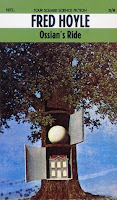


Fred Hoyle, Ossian's Ride

I surprised myself by quite enjoying the Hoyle book I read back in 2021, so I thought I'd give this one a go.  

The problem I had was that Hoyle isn't known for his sublty, so I went in dreading the kind of shaggy dog story an Englishman writing about Ireland in 1959 would put together.  When it developed into a silly spy plot, I gave up on it.  There might be something clever at the heart of the Industrial Corporation of Eire but, if so, I didn't get to it.
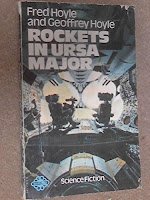

Fred Hoyle and Geoffrey Hoyle, Rockets in Ursa Major

I felt guilty about not finishing Ossian's Ride, so decided to give Hoyle another chance with this book which I picked up at the same time.

Apparently it's based on 'a play what he wrote'.  That might explain why it's terse, but not why every so often we get irrelevant details about lifts or things like air traffic control between London and Cambridge (I would rather have seen more effort given to the characters).  It's just not very good, so I didn't finish this one either.

Arthur C Clarke, Childhood's End

So I thought I'd go back to a classic (even if it's aged rather oddly).  One of Clarke's best.
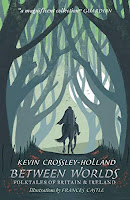


Kevin Crossley-Holland, Between Worlds: Folk Tales of Britain and Ireland

For reasons, I've decided to read up on folklore of the British Isles.  Crossley-Holland is an excellent story-teller, so seemed a good on to start with.


JRR Tolkien, The Silmarillion

I've started listening to The Prancing Pony Podcast (which I heartily recommend).  Each episode covers a chapter of Tolkien's writings starting with the Silmarillion.

So I've decided to re-read this famously difficult book (I read it 30-old years ago and found it hard going) with their guidance.  That's paying off (or it might be that I've acquired the wisdom of years).  No doubt it will take some time...


Monday, 29 November 2021

Books and Stuff (NS, No 22) - Reading in Nov 2021

I only read two books this month:  British science-fiction first published within two years  of each other (Earthlight in 1955 and The Black Cloud in 1957), though set a couple of hundred years apart.  They make an interesting comparison.

Arthur C Clarke, Earthlight


Fred Hoyle, The Black Cloud


Clarke (1917-2008) and Hoyle (1915-2001) were contempories, and both renowned populisers of science during the White Heat period (linked in many minds for their non-RP accents - Clarke from Somerset and Hoyle a Yorkshireman).  History has been kinder to Clarke, who's widely regarded as a visionary; Hoyle, though not forgotton (but note I feel it necessary to link to his Wikipedia entry, and not Clarke's!), is best remembered for being on the wrong side of too many important arguments (which may have overshadowed his other work and cost him a Nobel Prize).  Part of this was down to his belief that "it is better to be interesting and wrong than boring and right".

Clarke wrote more about concepts than people - Brian Aldiss wrote that his problems were always ones that could be solved by engineering.   When I went through my big Science Fiction phase in my teens I read some of his books, but wasn't inspired by them - they were rather worthy bull dull.  The Concept in Earthlight is the colonisation of the Moon (though the futility of war pops in).  The 'realistic' descriptions of the habitats there were apparently inspirational, and a crater near the Apollo 15 landing site is named after the book.

I picked up The Black Cloud expecting it to be hard-going.  I'd bought it as an oddity, not really expecting it to be readible.  Surprisingly, it was far more interesting and readible than the Clarke.  Both books are based in observatories and the scientific establishment.  The Black Cloud, set in 1964 (a decade after writing) starts as a procedural, scientific novel with the discovery of a cloud of dust rather closer to the Solar System than is confortable, it outlines the series of natural disasters that would then occur, before introducing a sudden twist.  A maverick professor of Astronomy at Cambridge (a post Hoyle held) is wrong for interesting reasons, high-handed with politicians and personal liberties and thereby saves the world (he's also the only person in either book who has sex, but that's another matter).

On balance I certainly preferred Hoyle's book - "interesting and wrong" rather than "boring and right"!