Showing posts with label Sci-Fi. Show all posts

Monday, 2 January 2023

Reading in Dec 2022

Having been bogged down recently in some turgid anthologies, I decided to aim for lighter fare and had a bit of a December splurge...


Isaac Asimov, Earth is Room Enough

A collection of Asimov's short stories, all based on earth.  It being Asimov, there is a proportion of silliness and a couple of groaners, but on the whole good stuff.


Cecily Gayford (ed), Murder on a Winter's Night: Ten Classic Crime Stories for Christmas

The sub-title says it all, really.


Cecily Gayford (ed), A Very Murderous Christmas: Ten Classic Crime Stories for the Festive Season

More of the same...

Both of these books took me back 30 years to a period in which my future wife was introducing me to the glories of green Penguins.  Some good memories there.

I really must read some Margery Allingham and Dorothy L Sayers soon.


Natalie Haynes,  A Thousand Ships

Haynes is well-known as a stand-up comic and classicist - I strongly recommend that you look online and find some of her work (in the UK, you should be able to listen here).

But there aren't many laughs in this marvellous re-telling of the women (and nymphs and goddesses) entangled in the Trojan War.  Epic tradegy, but highly recommended.


Brian Sibley, The Land of Narnia

A brief look at how the Chronicles of Narnia came to be written.  Aimed at younger readers and a large part is taken up with a summary of the books, but Sibley knows his stuff, of course (I imagine he could have done this in his sleep).


C S Lewis, The Magician's Nephew

It makes me feel very old to say that it's over 45 years since I first read this.  There are images in this book that still colour my approach to fantasy - nevertheless, one can still find new sides to old favorites.


C S Lewis, The Lion, The Witch and The Wardrobe

Being a contrary child, I never read this along with the rest of the Chronicles of Narnia.  I'm pretty sure that this is the first time I've read it at all!


Jonathan Tucker, The Troublesome Priest: Harold Davidson, Rector of Stiffkey

Biography of the Rector of Stiffkey - famously defrocked for immoral relations with prostitutes he was 'rescuing' and pestering shopgirls - who later became a sideshow performer and was killed by a circus lion in Skegness.

Tucker's verdict that Davidson was a fool, but not immoral, might have been alright in 1932 or 2004 (when he was writing), but makes unconvincing reading in 2020.  The man was obviously both a fool and a sex-pest.

CS Lewis, The Horse and His Boy

Lewis takes beyond the borders of Narnia into his Arabian analogue for this tale of runaway orphans, princesses and horses.

CS Lewis, Prince Caspian

The Pesvenie children make their second visit to Narnia, and help legitimise a dynasty.


Currently Reading

Peter Moore, Endeavour: The Ship and the Attitude that Changed the World

A splendid biography of Capt Cook's ship.  

For a little while I lived in a house of an age and location to have overlooked the yard in which Endeavour was being built, so the early chapters were of particular interest to me.

CS Lewis, The Voyage of the Dawn Treader

The book that introduced me to Narnia over 45 years ago.  Reading it now, it makes me long for those island-hoping holidays we had in the Western Isles when I was a boy.


Saturday, 1 October 2022

Books & Stuff (NS, No 32) - Reading in Sep 2022

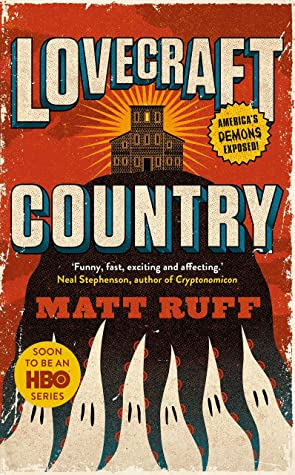
Matt Ruff, Lovecraft Country

Another book that has been made into a tv series that I haven't seen.  

This set of connected stories concerns an extended family/community of Back Americans living in 1950s Chicago.  For reasons of ancestry, they find themselves entangled in a power-struggle within an esoteric cult.  However, the skills learned to survive racist 1950s America are well-suited to dealing with Lovecraft's unfeeling, uncaring universe, and they more than hold their own.

I enjoyed this and the dry humour in it.  I'll keep my eye out for more of Ruff's work.

Shaun Bythell, Remainders of the Day

This is the third volume of Bythell's diaries of running the largest second-hand bookshop in Scotland, and covers 2016.  He cultivates a grumpy, "all-customers-are-idiots" persona that is reminiscent of Bernard Black.

For some reason (possibily because he's being lest cutting) I found this one less funny.  But it appeals to me on many levels.


Mike Ashley (ed), Lost Mars: The Golden Age of the Red Planet

The British Library publishing arm has been issuing a series of reprints of classic works of science fiction (they also did the same for crime fiction).

This one is an anthology of ten short stories relating to Mars from Wells in 1897 to Ballard in 1963.  Interesting and enjoyable reading, and I'll pick up more from the series (my local remaindered book store has a whole run of them).


Currently Reading

Ken Liu (ed & trans), Broken Stars

Another Sci-Fi anthology - the blurb on the cover says it all - "Sixteen Stories from the New Frontiers of Chinese Science Fiction".


Monday, 29 November 2021

Books and Stuff (NS, No 22) - Reading in Nov 2021

I only read two books this month:  British science-fiction first published within two years  of each other (Earthlight in 1955 and The Black Cloud in 1957), though set a couple of hundred years apart.  They make an interesting comparison.

Arthur C Clarke, Earthlight


Fred Hoyle, The Black Cloud


Clarke (1917-2008) and Hoyle (1915-2001) were contempories, and both renowned populisers of science during the White Heat period (linked in many minds for their non-RP accents - Clarke from Somerset and Hoyle a Yorkshireman).  History has been kinder to Clarke, who's widely regarded as a visionary; Hoyle, though not forgotton (but note I feel it necessary to link to his Wikipedia entry, and not Clarke's!), is best remembered for being on the wrong side of too many important arguments (which may have overshadowed his other work and cost him a Nobel Prize).  Part of this was down to his belief that "it is better to be interesting and wrong than boring and right".

Clarke wrote more about concepts than people - Brian Aldiss wrote that his problems were always ones that could be solved by engineering.   When I went through my big Science Fiction phase in my teens I read some of his books, but wasn't inspired by them - they were rather worthy bull dull.  The Concept in Earthlight is the colonisation of the Moon (though the futility of war pops in).  The 'realistic' descriptions of the habitats there were apparently inspirational, and a crater near the Apollo 15 landing site is named after the book.

I picked up The Black Cloud expecting it to be hard-going.  I'd bought it as an oddity, not really expecting it to be readible.  Surprisingly, it was far more interesting and readible than the Clarke.  Both books are based in observatories and the scientific establishment.  The Black Cloud, set in 1964 (a decade after writing) starts as a procedural, scientific novel with the discovery of a cloud of dust rather closer to the Solar System than is confortable, it outlines the series of natural disasters that would then occur, before introducing a sudden twist.  A maverick professor of Astronomy at Cambridge (a post Hoyle held) is wrong for interesting reasons, high-handed with politicians and personal liberties and thereby saves the world (he's also the only person in either book who has sex, but that's another matter).

On balance I certainly preferred Hoyle's book - "interesting and wrong" rather than "boring and right"!

Thursday, 1 April 2021

Books & Stuff (NS, No 14) - Reading in Mar 2021

For March I set myself the task of reading about Mars.  I didn't really think this through beforehand and if I have a theme month again (and I might), I shall prepare beforehand and stock up on books.  Despite that, I had more books than I read, and there were several I meant to read that I didn't quite get to.  I also didn't quite make the balence between fiction and non-fiction I wanted.  

In these respects Mars Month was a bit of a failure, as it didn't work as a deep-dive into my shelves.  One reason for that is (almost by defination) a lot of the books I have is quite dated; to get up-to-date info on Mars exploration I turned to the Internet and also listened to dozens of hours of podcasts.  This lead to a little 'Mars burn-out' and meant that at the end of the day I just didn't want to pick up a book on the subject.  I also significantly undersetimated my ability to absorb technic data - it's a long time since I had to do any 'homework'!

The lesson to me is that a themed month is OK, but it shouldn't be at the exclusion of everything else.

If any of you are tempted to ever have a Mars Month, there are a couple of useful Wikipedia pages on Mars in Fiction and Mars in Culture.

Here they are in the order I read them (do persevere through the lengthy discussion of The Red and Green Planet).


H G Wells, The War of the Worlds

I started with the grand-daddy of all 'alien invasion' books.  

I've always enjoyed the economy of Wells' writing and War of the Worlds gives an account of the invasion without any fat (even down to the fact that very few characters are named).  Despite that, it remains a very powerful story.

Of course, I'm of the age that when I read certain passages of this, I hear the voice of Richard Burton or David Essex.  Given the comments on my previous post, it seems that a number of you are too!

Thunderchild's Last Stand by Scot Andrew Bailey


Hubertus Strughold, The Green and Red Planet

The first thing that must be said is that this is the product of a shameful chapter in the history of science.  For me, at least, this makes it uneasy reading.

Strughold was a German physiologist who took an early interest in aviation medicine and, in particular, high-altitude flight.  From 1935 to 1945 he served as director of the Research Institute for Aviation Medicine in Berlin (from 1939 part of the Luftwaffe).  At the end of the war he was initially sought as a war criminal due to his complicity in experiments carried out on inmates of the Dachau concentration camp (it later emerged that he had also carried out oxygen-deprevation experiments on children scheduled to be killed as 'mentally unfit').  However, he was one of those scientists deemed by the Americans to be too useful to face justice and - as part of Operation Paperclip - he was relocated to the United States where he worked for the US Air Force and, later, NASA.  He died in 1986, lauded as the 'Father of Space Medicine'.

All of which is why I'm going to give a lengthier than normal justification of why I have the book on my shelves and have bothered to read it.

The Green and Red Planet is one of the first (if not the first) to give a popular account of the new disciplines of astrobiology and planetary ecology.  It was published at an interesting time (1954) and should be seen as part of a movement promoting the scientific exploration of space as a national goal for the US - von Braun and others had published their 'Man Will Conquer Space Soon!' articles in Collier's in 1952 and their Disneyland TV series would appear in 1955.  There is no doubt that this popular movement was influential in the Eisenhower Adminstration's decision to estabish NASA in 1958 and move rocket and satellite research out of military hands.

The first half of the 96-page book gives an introduction to astrobiology before moving on to Mars.  He gives us a planet where atmospheric pressure is the equivilent of 55,000ft above sea level and temperature ranges don't vary much from those found on Earth.  Of course, we now know these figures are wrong, but this is the definitive statement of the optimistic side of the argument for life on Mars as it was pushed until some of the basic assumptions on things like surface temperature and atmospheric conditions were proven wrong by the Mariner fly-bys of 1965 and 1969.  As such, it is a useful tool when reading pre-probe literature on the planet.

'Robinson Crusoe on Mars' (1964)

Isaac Asimov, The Martian Way and Other Stories


Only the title story of this collection is about Mars, but that's good enough to hit this month's theme.  Even that story isn't mainly set on the planet.  Ostensibly it's about solving the problem of lack of water there, but really it's about what John Wyndham called 'the Outward Urge' and Turner's (pretty much discredited) Frontier Thesis, both of which are major themes in Asimov's writing.

Asimov always gives good value and the other stories are worth reading.  The best of the lot is probably 'Sucker Bait', a very Asimov-y tale.

John Wyndham and Lucas Parkes, The Outward Urge

This is Wyndham's account (Lucas Parkes was one of his pen-names) of the human drive to populate the solar system, told through several generations of one family who happen to be present at crucial events.

It has an interesting chronology which allows for stories at 50-year intervals: - space stations in 1994, the first Moon landing in the 2020s, the first Mars landing in 2094, the first Venus landing in 2144 and mining the Asteroid Belt in 2194.

Charles Cockell (ed), Life Beyond: From Prison to Mars

The results of a colaboration between the UK Centre for Astrobiology at the University of Edinburgh and the Scotish Prision Service, whereby inmates took part in short courses focussing on the problems of human colonisation of Mars.

Note that this is 'colonisastion' rather than 'settlement' - the starting point is 50 years after the establishment of the first base.  As such, it is 'Red Sky' thinking and glibly throws around assumed technology such as fusion reactors and the availability of graphine for construction.

Given that the plans here are the products of laymen's after only a few weeks' work, they're excellent pieces of work.  A subsequent series of courses look at living on the Moon, also producing a book (I may get that at some stage).

Ray Bradbury, The Martian Chronicles

A lyrical classic which I've never read (I tried Bradbury as a teenager, but was put off by the lack of rayguns).

Perhaps the opposite of the Frontier Thesis I mentioned above.  Here the frontier doesn't serve as a catalyst making mankind better, it just serves to show that where-ever we go, we just bring along the same old baggage.


What I didn't read...

As I said, I had several books lined up which I didn't get round to.  Some I might read in future months.

As far as fiction goes, I've never read Edgar Rice Burrough's Barsoom Series - I've only read A Princess of Mars (to be honest, I think I would need a good reason like a theme month to launch into it).  For light relief between heavier books I had a couple of Heinlein juveniles - Red Planet and Space Family Stone.  Also to be re-read as relief (because I always enjoy it so much) was Any Weir's The Martian.  And for slightly less light relief was CS Lewis' Out of the Silent Planet.

Non-fiction wise, I think I should have started by re-reading Oliver Morton's Mapping Mars, which is the best book I've read on the subject, and Patrick Moore on Mars.  I had hoped to get around to a book I have on the Beagle 2 probe and Colin Pillinger's autobiography My Life on Mars, which are still firmly on my to-read list.

Tuesday, 2 March 2021

Books & Stuff (NS, No 13) - A Self-Imposed Challenge

This month I thought I'd do something different.  On a whim, I've decided that March should be Mars Month.


When I went to my bookshelf I realised that I had fewer non-fiction books on the planet that I'd thought, all but two of which I'd read.  (Of the above, by the way, my recommendation is for Oliver Morton's Mapping Mars).

But no matter, I'm going to have to do some re-reading if I'm going to have a whole month of Mars, and in any case, I have no intention of sticking with non-fiction.

NASA concept art, 1964


Thunderchild's Last Stand by Scot Andrew Bailey


Monday, 23 November 2020

Wasters: No 1 An Introduction


This weekend I played in a new game and, for me, a new gaming genre: cyberpunk.  I've written-up that session here.

This was ‘Wasters’.  In effect, I’m taking part in the playtesting of a new system by Joseph Norris of Adversity Games adapting B/X rules (in our case, OSE) to a cyberpunk setting.  The emphasis is on the exploration vibe of Old-School games. 

After just one session’s play it would be silly and unfair to make much comment on the system or game-play.  I may do a review later, but for now will limit myself to a basic introduction to the setting and an after-action report. 

[Acknowledgement: much of this is copied from v0.1 of Wasters, but in paraphrasing, I may have added my own flavour.] 

The Setting 

We are in a dystopian future.  Life is governed by controlling authorities, ruthless corporations, organised crime and street gangs.  Day-to-day survival is the priority for most. Many do this by being part of the system, and become one of the abusers and exploiters out of desperation.   You are not one of these. 

The wealthy have withdrawn into their own enclaves, leaving the majority of society living in the Slums.  Here, inhabitants find themselves the target of thieves and gangs demanding protection money – not to mention the authorities that will suddenly take an interest if you have anything they can squeeze you for.  But there is some order at least: in the Slums you have a reasonable expectation of not being shot unless you provoke someone, enter gang turf without permission, bother the police, or lack the wits to get out of the way when raiders go on a rampage.    

Outside the Slums are the Wastes – abandoned by any form of order or protection from economic collapse, disaster, or war.  But untold wealth of a previous age lies abandoned in these shattered ruins.  There are also wild animals, malfunctioning drones and gangs too unruly even for the Slums.  

You were once a Slum-dweller, but through ideology, misfortune, carelessness or disillusionment you have left that behind.   Now you use your skills to trawl through ruins, collapsed corporate complexes, buried nuclear bunkers and forgotten headquarters of flavour-of-the-month gangs for long-lost valuables. 

Character Types

Those in the slums call you Wasters. But not to your face, because they’re scared of you.  

At this stage in the playtest process, character types are limited to four analogues of B/X Classes; - 

  • Analyst – Users of tech (analogue of Magic User).  They use their devices and skills to support the crew from a safe distance.  As they advance in level, they can build and use an increasing number of more powerful functions. 
  • Infiltrator – A sneak, spy and sniper (analogue of Thief). 
  • Ronin – Dispossessed soldiers, enforcers or hitmen (analogue of Fighter) 
  • Sentinel – Wasters who join the front of combat to protect their crew, carrying a jammer to disrupt drones (analogue of Cleric).  As they advance, they develop support functions. 
Coming Soon...

My first mission in the Wastes.

Sunday, 25 October 2020

Getting My Geek In (Again)

Another week, another haul from Charity Shops...


Obviously I'm getting ready for Second Lockdown (though I've still go four seasons of 'Buffy' to watch first: 'Firefly' went by far too quickly).  Being the age that I am, I'm most excited to watch the 'Blake's 7' (if somewhat aprehensive about how bad it might turn out to be...).

Monday, 5 October 2020

Getting My Geek In

Last Friday was one of my few days off from managing the charity shop (we've been very short-staffed since Lockdown was lifted).  So what did I do?  I went into a couple of charity shops at the other end of the city.

And look what I got...

Ross S Kraemer; William Cassidy; Susan L Schwartz, Religions of Star Trek, Westview Press (2003).

H P Lovecraft, The Case of Charles Dexter Ward, Creation Oneiros (2008).


Because my reading hasn't been sufficiently niche lately!

Saturday, 3 October 2020

Books & Stuff (NS, No 6) - Reading in Sep 2020


Robert A Heinlein, Time for the Stars

What can I say?  I love the Heinlein juveniles.  And they're just the right length to read at a (long) sitting (and if you don't have anyone who objects to the light being on until 4am).

Joss Whedon, Brett Matthew, Will Conrad, Serenity: Those Left Behind

Regular readers might have spotted the odd hint that I'm a 'Firefly' fan.  During Lockdown I watched several dvd box-sets.  One of them was the complete 'Firefly' - which, sadly, doesn't take long.  I'm now making up for it and getting some Joss Whedon fix by watching the complete 'Buffy the Vampire Killer' (which is less hokey than I remember).

This comic book (orignally issued in three issues) bridges the gap between the premiture end of the TV series and the film 'Serenity'.

It's nothing spectacular - it would have made a couple of decent episodes.

John Gisby, New Zealand With A Hobbit Botherer

A quite funny account of a holiday to New Zealand the author took with his Orlando Bloom-fancying wife in 2004 - the height of the LOTR tourist boom.

Light but fun.


Currently Reading


Simon Harris, The Other Norfolk Admirals: Myngs, Narbrough and Shovell

Biography of the aforesaid admirals.  Another study of the Restoration navy.

I'm not sure if I actually picked this up during the month. It's a little heavy-going.


James Ellroy, Perfidia

About 20 years ago I read a shit-load of James Ellroy (that's the technical term), but very little since.

Perfidia is the first book in the Second LA Quartet, serving as a prequel to the first Quartet.  This book covers the first fortnight of America's entry into the Second World War and, more specifically how that effects LA's Japanese community and the LAPD.

As you'd expect from James Ellroy it's dark, dense and a little perverted.  

A great read.  It's making me thing that I should re-read the original Quartet: but a little Ellroy goes a long way!

Max Brooks, The Zombie Survival Guide

Because the way this year is going, it's better to be safe isn't it?

I picked this up on a whim and am finding it better than I expected (I didn't rate the film that was made of his other book, World War Z).  It's written in a dead-pan completely in-universe style and makes some interesting games.

If anyone plays any Zombie RPGs (or LARPS!) this would prove invaluable reading.

Monday, 31 August 2020

Books & Stuff (NS, No 5): Reading in August 2020

Robert A Heinlein, Starman Jones

The Heinlein juveniles are dear to my heart, and I occasionally pick one up to re-read.  Starman Jones was the first (and the first Heinlein) that I read, aged about 12 (so around 1980!).   

The plot of the book revolves around the use of log tables, which I'm just old enough to have done at school (probably a year or so after first reading it).  The prompt to pick it up was an exchange in a Discord channel about log tables (in the context of AD&D).


Stanley Ellin, The Speciality of the House

It took me months, but I've finished this great collection of short stories.  I find that if I read too many short stories one after another I loose the effect, so I'm treated it as a book to dip into.  Well worth the effort.


Bayt al Azif: A Magazine for Cthulhu Mythos Roleplaying Games, Issue 2 (Aug 2019)

Number 2 of this magazine, which keeps up the high standard of No 1 (which I read back in June).  I keep thinking I should do a proper review of both issues.


Currently Reading


Simon Harris, The Other Norfolk Admirals: Myngs, Narbrough and Shovell

Biography of the aforesaid admirals.  Another study of the Restoration navy.

I'm only nominally reading this - I don't think I've picked it up for weeks!


Wednesday, 24 July 2019

Spacemen and Space Monsters


Back on Saturday I posted that I had just ordered some of Cold War Minis astronauts (to me, these are definitely Spacemen, and that's how they will be referred to from now on!  I don't know what the gender-neutral version of Spacemen is.)

Well they arrived this morning (it's Wednesday), and are rather nice.


Looking at them, it strikes me that they might make a good match for Statuesque Miniatures Statuesque Starport range.  Those may end up next on the shopping list...


And by a stroke a serendipity, this morning I spotted some suitable Alien Opponents in the charity shop.  Great, eh?


And yes, I do know the story of the origins of the Rust Monster et al.

Monday, 10 April 2017

Good News Sci-Fi Fans!


As some of you will know, there has recently been a (hopefully amicable) parting of the ways at Crooked Dice Miniatures.

Graeme Dawson, responsible for the Doctor Who Miniatures Game PDF (the one that's nothing to do with Warlord Games!) and most of the 7TV 1st and 2nd edition rules has left to set up his own business The Beast in the Broch.  He's taken the excellent not-Blake's 7 range with him and is planning to draft some rules to go with them.

His website went live today and anyone who subscribes to his mailing list will get 20% off any purchases in April.  I'm sure his cash-flow could do with a boost if he's going to develop new things, so go and buy something!

Sunday, 6 September 2015

I Treated Myself This Week...

...by doing something I don't often do.  I bought myself a new book.

"Hang on!" My loyal readers cry "You can't kid us: the Edwin we know buys books all the time!"

Well yes, I do.  But I don't often go out and buy a new book for myself.  What I tend to do is to rely on serendipity to throw second-hand books my way (and given I sort books in a Charity Shop, quite a few come my way).  I very rarely buy a book as a pre-planned purchase.  And I hardly ever buy a new book at it's proper price.

But this week I read a review of a newly-published book that would do for The Wife's birthday* so I popped one into the shopping basket while I was at it.

*Sssh, don't tell her!

The book in question was The Martian by Andy Weir, and I've just finished reading it.


You might have come across it as it's been a best-seller and Ridley Scott has just made it into a film staring Matt Damon.  It's the latter that's prompted me to read it - I wanted to do so before the movie hype gives away all the plot twists (I have seen a trailer for the film though, and it looks good*).

*I'm a little concerned at the casting of Chiwetel Ejiofor as Venkat Kapoor.  Fine actor though he is, he's hardly a Kapoor...


The set-up is straightforward enough.  Disaster strikes a manned mission to Mars and they are forced to abort.  While evacuating their base one of their number is seemingly killed.  Yet it turns out he hasn't.  How will he survive?  And if he does, will it be for long enough to be rescued?  Given that the closest prospect of rescue is likely to be four years away, the second isn't a trivial matter.

So, what did I think?  I really enjoyed it.  It won't be everyone's cup of tea: this is the hardest of 'hard sci-fi'.  You might expect that being stranded on a strange planet might lead to some existential soliloquies from our hero, but you'll be wrong.  Pretty much the first third of the book consists of him doing sums, bodging and fracking in order to get enough food and calories to survive.  It's not until NASA's belated relisation that he's still alive that we get any dialogue or much characterisation.

In way this is one of the selling points of the book.  Weir doesn't argue so, but it's been said that with Mars exploration requiring a nine month journey, a month on the planet and then the anticlimactic nine month voyage home, Martian explorers will have to be very different from their Mercury or Apollo predecessors.  Their 'Right Stuff' won't be being jocks or excelling at outdoors-y stuff*, but much more likely being nerds happy to sit in confined spaces looking at computer screens.  Anyone with a tendency to existentialism (or too much imagination). a habit of talking to volleyballs or hopes of finding a Martian Man Friday would be weeded out of the programme pretty early on.  They would still have to be photogenic though...

*Mountain climbing on Mars will come later.

In short, I would recommend this book.  But then again (for those of you who prefer not to have harsh reality in your sci-fi) I'd also heartily recommend 'Robinson Crusoe on Mars'.  It has some pretty cutting edge 1964 space-science (and space-potatoes).


Tuesday, 11 November 2014

Interesting Kickstarter


Now, as will be apparent to regular readers, I'm quite keen on pulp and retro sci-fi (or AtomPunk even).  I was interested therefore to read a post on the League of Extraordinary Gamers blog about a newish Kickstarter Assault on Fortress Moon.


I'm not going to go into much detail as the LXG post and the Kickstarter page does that, but it does look interesting.  The artwork and fluff seem good.

I'm not sure if I'll be backing myself (to get a physical copy here in the UK would require an $85.00 commitment), but I shall watch it.  They're looking for $25,000, which seems a lot, and I'm not sure if they'll make it.