Showing posts with label Mars. Show all posts

Saturday, 1 October 2022

Books & Stuff (NS, No 32) - Reading in Sep 2022

Matt Ruff, Lovecraft Country

Another book that has been made into a tv series that I haven't seen.  

This set of connected stories concerns an extended family/community of Back Americans living in 1950s Chicago.  For reasons of ancestry, they find themselves entangled in a power-struggle within an esoteric cult.  However, the skills learned to survive racist 1950s America are well-suited to dealing with Lovecraft's unfeeling, uncaring universe, and they more than hold their own.

I enjoyed this and the dry humour in it.  I'll keep my eye out for more of Ruff's work.

Shaun Bythell, Remainders of the Day

This is the third volume of Bythell's diaries of running the largest second-hand bookshop in Scotland, and covers 2016.  He cultivates a grumpy, "all-customers-are-idiots" persona that is reminiscent of Bernard Black.

For some reason (possibily because he's being lest cutting) I found this one less funny.  But it appeals to me on many levels.


Mike Ashley (ed), Lost Mars: The Golden Age of the Red Planet

The British Library publishing arm has been issuing a series of reprints of classic works of science fiction (they also did the same for crime fiction).

This one is an anthology of ten short stories relating to Mars from Wells in 1897 to Ballard in 1963.  Interesting and enjoyable reading, and I'll pick up more from the series (my local remaindered book store has a whole run of them).


Currently Reading

Ken Liu (ed & trans), Broken Stars

Another Sci-Fi anthology - the blurb on the cover says it all - "Sixteen Stories from the New Frontiers of Chinese Science Fiction".


Saturday, 1 May 2021

Books & Stuff (NS, No 15) - Reading in Apr 2021

Finished Reading

Ray Bradbury, The Martian Chronicles

A hang-over from 'March is Mars Month', and I discussed it in the last round-up

There I called it a lyrical classic about human baggage, which I'll stick with.


Connie Willis, To Say Nothing of the Dog

One of Willis' splendid books on the Oxford Faculty for Time Travel.  In this one, everyone has been caught up in a donor's huge vanity project (to recreate the bombed Coventry Catherdral in perfect detail).  Willis is one of those writers who keeps me up all night.

It's both a tribute to J K Jerome's Three Men in a Boat and a study of chaos theory.  A hoot.

Ben Aaronovitch, False Value

When I started this I was a little concerned that - at Book 8 - the Rivers of London series might have run out of steam.  I need have only been slightly worried.  Although, not up to the high standard of the first couple of books, this certainly kept pace with the later ones.

The only problem is that I need a concordance to keep up with all the characters and references.  I'm sure there's one online somewhere, but that's not much help to me when I'm sitting up reading at 2.30am.

Aubrey/Maturin Series

Patrick O'Brian
Master and Commander 
Post Captain
HMS Surprise
The Mauritius Command

I had an inclination to re-read some of the Aubrey/Maturin books - not necessarily all of them (that would be too much of A Project), but it seems to be heading that way.  

It was with some surprise that I see that they are older now than the Hornblower books were when I first read those (and then they seemed positively antique!).  Still, they take me back...  I first read them in the 90s when I used to have a long commute (most of my copies were bought at WH Smiths on Liverpool's Lime Street Station).  It was a formative period for me.  At the time I was developed a focus on maritime and naval history which ran as a thread in my career for a while.

Currently Reading

Patrick O'Brian, Desolation Island

The crew head towards the Botany Bay colony (with a few convicts including a beautiful female spy), but run into trouble in the South Atlantic.

Thursday, 1 April 2021

Books & Stuff (NS, No 14) - Reading in Mar 2021

For March I set myself the task of reading about Mars.  I didn't really think this through beforehand and if I have a theme month again (and I might), I shall prepare beforehand and stock up on books.  Despite that, I had more books than I read, and there were several I meant to read that I didn't quite get to.  I also didn't quite make the balence between fiction and non-fiction I wanted.  

In these respects Mars Month was a bit of a failure, as it didn't work as a deep-dive into my shelves.  One reason for that is (almost by defination) a lot of the books I have is quite dated; to get up-to-date info on Mars exploration I turned to the Internet and also listened to dozens of hours of podcasts.  This lead to a little 'Mars burn-out' and meant that at the end of the day I just didn't want to pick up a book on the subject.  I also significantly undersetimated my ability to absorb technic data - it's a long time since I had to do any 'homework'!

The lesson to me is that a themed month is OK, but it shouldn't be at the exclusion of everything else.

If any of you are tempted to ever have a Mars Month, there are a couple of useful Wikipedia pages on Mars in Fiction and Mars in Culture.

Here they are in the order I read them (do persevere through the lengthy discussion of The Red and Green Planet).


H G Wells, The War of the Worlds

I started with the grand-daddy of all 'alien invasion' books.  

I've always enjoyed the economy of Wells' writing and War of the Worlds gives an account of the invasion without any fat (even down to the fact that very few characters are named).  Despite that, it remains a very powerful story.

Of course, I'm of the age that when I read certain passages of this, I hear the voice of Richard Burton or David Essex.  Given the comments on my previous post, it seems that a number of you are too!

Thunderchild's Last Stand by Scot Andrew Bailey


Hubertus Strughold, The Green and Red Planet

The first thing that must be said is that this is the product of a shameful chapter in the history of science.  For me, at least, this makes it uneasy reading.

Strughold was a German physiologist who took an early interest in aviation medicine and, in particular, high-altitude flight.  From 1935 to 1945 he served as director of the Research Institute for Aviation Medicine in Berlin (from 1939 part of the Luftwaffe).  At the end of the war he was initially sought as a war criminal due to his complicity in experiments carried out on inmates of the Dachau concentration camp (it later emerged that he had also carried out oxygen-deprevation experiments on children scheduled to be killed as 'mentally unfit').  However, he was one of those scientists deemed by the Americans to be too useful to face justice and - as part of Operation Paperclip - he was relocated to the United States where he worked for the US Air Force and, later, NASA.  He died in 1986, lauded as the 'Father of Space Medicine'.

All of which is why I'm going to give a lengthier than normal justification of why I have the book on my shelves and have bothered to read it.

The Green and Red Planet is one of the first (if not the first) to give a popular account of the new disciplines of astrobiology and planetary ecology.  It was published at an interesting time (1954) and should be seen as part of a movement promoting the scientific exploration of space as a national goal for the US - von Braun and others had published their 'Man Will Conquer Space Soon!' articles in Collier's in 1952 and their Disneyland TV series would appear in 1955.  There is no doubt that this popular movement was influential in the Eisenhower Adminstration's decision to estabish NASA in 1958 and move rocket and satellite research out of military hands.

The first half of the 96-page book gives an introduction to astrobiology before moving on to Mars.  He gives us a planet where atmospheric pressure is the equivilent of 55,000ft above sea level and temperature ranges don't vary much from those found on Earth.  Of course, we now know these figures are wrong, but this is the definitive statement of the optimistic side of the argument for life on Mars as it was pushed until some of the basic assumptions on things like surface temperature and atmospheric conditions were proven wrong by the Mariner fly-bys of 1965 and 1969.  As such, it is a useful tool when reading pre-probe literature on the planet.

'Robinson Crusoe on Mars' (1964)

Isaac Asimov, The Martian Way and Other Stories


Only the title story of this collection is about Mars, but that's good enough to hit this month's theme.  Even that story isn't mainly set on the planet.  Ostensibly it's about solving the problem of lack of water there, but really it's about what John Wyndham called 'the Outward Urge' and Turner's (pretty much discredited) Frontier Thesis, both of which are major themes in Asimov's writing.

Asimov always gives good value and the other stories are worth reading.  The best of the lot is probably 'Sucker Bait', a very Asimov-y tale.

John Wyndham and Lucas Parkes, The Outward Urge

This is Wyndham's account (Lucas Parkes was one of his pen-names) of the human drive to populate the solar system, told through several generations of one family who happen to be present at crucial events.

It has an interesting chronology which allows for stories at 50-year intervals: - space stations in 1994, the first Moon landing in the 2020s, the first Mars landing in 2094, the first Venus landing in 2144 and mining the Asteroid Belt in 2194.

Charles Cockell (ed), Life Beyond: From Prison to Mars

The results of a colaboration between the UK Centre for Astrobiology at the University of Edinburgh and the Scotish Prision Service, whereby inmates took part in short courses focussing on the problems of human colonisation of Mars.

Note that this is 'colonisastion' rather than 'settlement' - the starting point is 50 years after the establishment of the first base.  As such, it is 'Red Sky' thinking and glibly throws around assumed technology such as fusion reactors and the availability of graphine for construction.

Given that the plans here are the products of laymen's after only a few weeks' work, they're excellent pieces of work.  A subsequent series of courses look at living on the Moon, also producing a book (I may get that at some stage).

Ray Bradbury, The Martian Chronicles

A lyrical classic which I've never read (I tried Bradbury as a teenager, but was put off by the lack of rayguns).

Perhaps the opposite of the Frontier Thesis I mentioned above.  Here the frontier doesn't serve as a catalyst making mankind better, it just serves to show that where-ever we go, we just bring along the same old baggage.


What I didn't read...

As I said, I had several books lined up which I didn't get round to.  Some I might read in future months.

As far as fiction goes, I've never read Edgar Rice Burrough's Barsoom Series - I've only read A Princess of Mars (to be honest, I think I would need a good reason like a theme month to launch into it).  For light relief between heavier books I had a couple of Heinlein juveniles - Red Planet and Space Family Stone.  Also to be re-read as relief (because I always enjoy it so much) was Any Weir's The Martian.  And for slightly less light relief was CS Lewis' Out of the Silent Planet.

Non-fiction wise, I think I should have started by re-reading Oliver Morton's Mapping Mars, which is the best book I've read on the subject, and Patrick Moore on Mars.  I had hoped to get around to a book I have on the Beagle 2 probe and Colin Pillinger's autobiography My Life on Mars, which are still firmly on my to-read list.

Tuesday, 2 March 2021

Books & Stuff (NS, No 13) - A Self-Imposed Challenge

This month I thought I'd do something different.  On a whim, I've decided that March should be Mars Month.
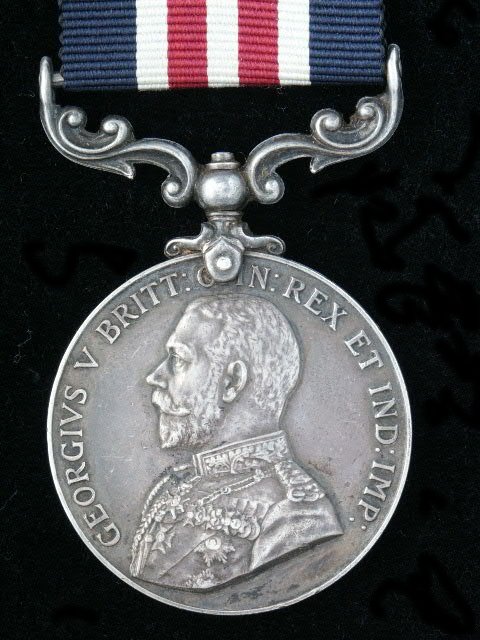

When I went to my bookshelf I realised that I had fewer non-fiction books on the planet that I'd thought, all but two of which I'd read.  (Of the above, by the way, my recommendation is for Oliver Morton's Mapping Mars).

But no matter, I'm going to have to do some re-reading if I'm going to have a whole month of Mars, and in any case, I have no intention of sticking with non-fiction.

NASA concept art, 1964


Thunderchild's Last Stand by Scot Andrew Bailey


Sunday, 6 September 2015

I Treated Myself This Week...

...by doing something I don't often do.  I bought myself a new book.

"Hang on!" My loyal readers cry "You can't kid us: the Edwin we know buys books all the time!"

Well yes, I do.  But I don't often go out and buy a new book for myself.  What I tend to do is to rely on serendipity to throw second-hand books my way (and given I sort books in a Charity Shop, quite a few come my way).  I very rarely buy a book as a pre-planned purchase.  And I hardly ever buy a new book at it's proper price.

But this week I read a review of a newly-published book that would do for The Wife's birthday* so I popped one into the shopping basket while I was at it.

*Sssh, don't tell her!

The book in question was The Martian by Andy Weir, and I've just finished reading it.


You might have come across it as it's been a best-seller and Ridley Scott has just made it into a film staring Matt Damon.  It's the latter that's prompted me to read it - I wanted to do so before the movie hype gives away all the plot twists (I have seen a trailer for the film though, and it looks good*).

*I'm a little concerned at the casting of Chiwetel Ejiofor as Venkat Kapoor.  Fine actor though he is, he's hardly a Kapoor...


The set-up is straightforward enough.  Disaster strikes a manned mission to Mars and they are forced to abort.  While evacuating their base one of their number is seemingly killed.  Yet it turns out he hasn't.  How will he survive?  And if he does, will it be for long enough to be rescued?  Given that the closest prospect of rescue is likely to be four years away, the second isn't a trivial matter.

So, what did I think?  I really enjoyed it.  It won't be everyone's cup of tea: this is the hardest of 'hard sci-fi'.  You might expect that being stranded on a strange planet might lead to some existential soliloquies from our hero, but you'll be wrong.  Pretty much the first third of the book consists of him doing sums, bodging and fracking in order to get enough food and calories to survive.  It's not until NASA's belated relisation that he's still alive that we get any dialogue or much characterisation.

In way this is one of the selling points of the book.  Weir doesn't argue so, but it's been said that with Mars exploration requiring a nine month journey, a month on the planet and then the anticlimactic nine month voyage home, Martian explorers will have to be very different from their Mercury or Apollo predecessors.  Their 'Right Stuff' won't be being jocks or excelling at outdoors-y stuff*, but much more likely being nerds happy to sit in confined spaces looking at computer screens.  Anyone with a tendency to existentialism (or too much imagination). a habit of talking to volleyballs or hopes of finding a Martian Man Friday would be weeded out of the programme pretty early on.  They would still have to be photogenic though...

*Mountain climbing on Mars will come later.

In short, I would recommend this book.  But then again (for those of you who prefer not to have harsh reality in your sci-fi) I'd also heartily recommend 'Robinson Crusoe on Mars'.  It has some pretty cutting edge 1964 space-science (and space-potatoes).


Friday, 16 January 2015

Lost Beagle Found

Great news, Beagle-2 did manage to land safely after all.  At the time, you may remember, the method of using airbags to bounce on landing was widely blamed for the failure.


The European Space Agency has announced that the probe, which was due to land on Christmas Day 2003 has been spotted by the hi-res camera on NASA's Mars Reconnaissance Orbiter. That in itself is a remarkable achievement as Beagle-2 would only have been two metres wide if fully deployed.

The initial analysis of the photos is that Beagle landed successful and managed to deploy solar panels - crucially, however, these weren't all deployed and so not enough power was generated for the probe to operate.

What should have happened
A damn'd near thing!

Tuesday, 4 November 2014

Out There...

It was been a bad week for manned space exploration with the explosion of the Antares rocket intended to re-supply the ISS and the tragic crash of the Virgin Glalatic SpaceShip Two.

These have naturally thrown light on the safety aspects of space travel - with many pointing out that the pilot of the VSS Enterprise was the first fatality in spaceflight since 2003, and that the development of supersonic flight was much more risky.  One aspect that is more interesting to me is that these were both aspects of the long hoped for transfer of space exploration from government organisations to private enterprise.  It remains to be seen how the crashes will affect that transfer (there is an argument that private enterprise is more capable of getting over a disaster than government organisation - witness the paralysis that struck NASA following the Shuttle disasters).

Despite these set-backs, it is clear we are in a golden age of space science.  Stunning discoveries that would have been front-page news a few years ago are now normalised (New planet anyone?  Yawn!).

 Photos such as the ones below were the stuff of dreams and sci-fi, but now come in every day.

Dingo Pass, Mars (Photo: NASA)
Rhea and Titan (Photo: NASA)

Hydrocardon seas on Titan (Photo: NASA)
The story of the European Space Agency's rendezvous, stalking and landing on a comet is remarkable.  When was the last time the ESA was ever made headlines?  They deserve them.

On 12 November, the lander Philae will leave the Rosetta spacecraft (which was launched back in 2004) and land on the nucleus of the snappily-named 67P/Churyumov–Gerasimenko, delivering 25kg of scientific instruments.  That will be a truly momentous occasion.

How we're used to thinking of comets (Photo: ESA)

How we can now think about them now (Photo: ESA)
When Rosetta was launched it wasn't certain whether there would be any nucleus of substance to land on, or whether it would have the consistency of  cigarette ash.  But then again, in the 60s there were similar concerns about landing on the moon.

Getting closer...

Sunday, 6 July 2014

I should have blogged about... (#2)

As most have you will realise by now, these days my blog tends to be reactive - something strikes my fancy and it sets me off down a path of further research or (more likely) a stream of consciousness.

So, if I'd been around to blog last week what would you have been reading?

When Franz and Sophie Met Gavrilo


I had intended to mark the centenary of the Sarajevo assassination by doing profiles of Archduke Franz Ferdinand, Duchess Sophie and Gavrilo Princip.   Well, frankly, you'll have read all that elsewhere if you'd wanted to.

In an aside, the BBC kept referring to the assassination as 'the shot heard around the world'.  Well it might have been, but it jarred with me: the phrase was coined by Ralph Waldo Emerson to describe the first shot of the American War of Independence at Concord, MA.  It's that kind of pedantry which you missed...  Oh what fun we would have had!

Flying Saucers to Mars...


NASA tested its saucer-shaped 'landing system', the Low-Density Supersonic Decelerator (LDSD).  They did this by attaching it to a stadium-sized balloon and dropping it 180,000 above Hawaii.  The idea is to use this system to deliver robotic missions to Mars in advance of human exploration.

But Are Chas and Nailbrush Included?


Plasticine hero Morph returned from the dead, albeit on a YouTube channel, following a Kickstarter campaign.

Damn, Big Ship!


HM Queen Elizabeth wasted a single malt launching HMS Queen Elizabeth, a very fine looking aircraft carrier.  Unfortunately there aren't any planes to go on it and without a decent destroyer screen it's nothing but a very large target.  It seems HMS Prince of Wales will be mothballed before she (yes, she) is launched.

Told You So!


It was announced that Nurse Edith Cavell will be commemorated on a new £5.00 coin to be issued next year.

You Scratch Mine, I'll...


Famous tennis dress sold for £15,500.  Who would buy something like that?  I have my own theory.

Thursday, 29 August 2013

The Gods Smile on Me!

Before we get to what I'm talking about in the title, some important business...

Welcome to new followers.
Welcome guys!

Prizes!

Now, what's this about smiling gods?  Well it turns out that I'm a winner!  

As many of you know, the guys over at Canister & Grape have been having a competition to celebrate their 50K mark.  I was lucky enough to win this rather splendidly painted figure.

Lovely, eh?

I can't wait for him to arrive.  The Wife looked at him rather suspiciously and asked "What's SAGA?"

Secondly, James at the Gonzo History Project seems to have tired of the 'neat' formatting he was provided with by Wordpress.  He therefore announced that he would give prizes to the three best page submitted to him.  Luckily for me there were only three entries, so my cobbled together effort has earned a goodie bag.  See the entries here.
News from the Fourth Planet

It's been rather a long time since I posted about Mars.  Well, NASA has just released a rather nice series of pictures.


It's not, as someone claimed, a three-eyed Muppet.  Rather is the record of an solar incursion (an eclipse of the sun) by the moon Phobos taken by the Mars rover Curiosity.  I think it's rather awesome, but I'm a sucker for all things martian (and Martian!).  More information here.  

It highlights the odd coincidence that Earth is such a distance from the Sun and our Moon that both appear the same size - thus when we have eclipses the Moon sometimes matches the Sun's disc exactly.

Saturday, 12 January 2013

Projects in Hand


I'm sorry I haven't really blogged this week.  That's partly down the the fact that I was away for a few days last weekend and that there have been developments on the health/work front - Real Life does tend to get in the way sometime!

But mainly it's because I have been distracted by other projects, so I thought a few words of explanation might be in  order.

Military Medal Project

The first is a commitment I made some time ago (way back before I started this blog!) to do some drudge work to help in a book on recipients of the Military Medal that's projected to come out next year. I'd undertaken to do some collating of information from the Commonwealth War Graves Commission registers and other sources on recipients who died in World War I, and I'm afraid to say that I've been neglecting it of late. 

Thus one of my New Year resolutions was to do a certain amount of that work every day before I thought of doing other things, like blogging.

I'm half-way through the 'Gs' and have several tens of thousands to go...

Depressed Diplomatist or Citizen Scientist?


Those who know me, or who have read between the lines of this blog, know that I have an interest in the planets of the Solar System, especially Mars.

An interesting project to map Mars has come up this week.  This is Planet Four, which is asking ordinary people to give some time to look at and classify photos of the southern polar region.  The idea is that thousands of people doing a little each can achieve more than a handful of scientists (and it's not a process that can be easily automated).

This Citizen Scientist project is from the Zooniverse stable, which has several projects on the go.  These range from astronomy (deep space, Mars and the Moon), to nature (whales, bats and the ocean floor), to the humanities (looking at ancient papyri).

In the past I've been involved in a climate project, transcribing WWI-era ships' logs to use as raw data in plotting weather patterns.  Of course, that has a spin-off for naval enthusiasts like myself, and I'm glad to say that the transcripts are now becoming available on naval-history.net

Hostages to Fortune

But I am committed to this blog, so to force me to actually do something, I'll make some rash promises about what you'll see in the near future...

I have in hand a draft of a profile of Sir William Goodenough, who was probably the RN admiral who saw most action in WWI.  After that, aware that I've lost the original concept of the Monday Moustaches by including too many admirals (Beardies?), I'll concentrate on army types to restore the balance.

I've also started drafting a post on the Order of Merit as part of the Orders of Knighthood series.  That, I suppose, should be partnered by a look at the Companions of Honour.

The next Royals in Medals will probably be Prince George and Princess Marina, the Duke and Duchess of Kent.  I haven't done anything toward this yet.

Over to You...

Oddly enough this neglect on my part has been matched by a peak in visitor numbers.  I'm interested in feedback.  What brought you here?  Do you come back regularly?  What do you like/dislike about the blog?  What would you like to see here? 

Bear in mind this is my blog, and I'm not going to go off in any radical new directions!

Saturday, 20 October 2012

Twinned With... Mars


File:PIA16154 fig1-Mars Curiosity Rover - Road To Glenelg.jpg
Glenelg, Mars

The small Scottish settlement of Glenelg (popl 291)  is celebrating the arrive of the Curiosity Rover at its namesake in the Gale Crater, Mars (popl ???), with a twinning ceremony and ceilidh tomorrow - Party On!

Although the NASA team named the martian feature after one in Yellowknife in the Northwest Territories of Canada and the fact that it is a palindrome (they'll be visiting on the way out and the way back), the name originally comes from the Highland settlement opposite the Isle of Skye.

Glenelg, Scotland
For a comparison of the two Glenelgs, have a look at the BBC's site, which also has an interesting story
Cosmic coincidence on the road to Glenelg.

Friday, 28 September 2012

Curiosity Update #2: Riverbed find


Curiosity science team member Sanjeev Gupta explains how rounded pebbles spotted by the rover are convincing evidence of an ancient streambed on Mars.

Credit: NASA/JPL-Caltech

Wednesday, 29 August 2012

Curiosity Update #1: The View From Mars


The Curiosity Rover has sent us its latest photos of the Gale Crater, looking towards Mount Sharp.

The gravelly area around Curiosity's landing site is visible in the foreground.  Farther away, about a third of the way up from the bottom of the image, the terrain falls off into a depression (a swale).  Beyond the swale, in the middle of the image, is the boulder-strewn, red-brown rim of a moderately-sized impact crater.  Farther off in the distance, there are dark dunes and then the layered rock at the base of Mount Sharp.  Some haze obscures the view, but the top ridge, depicted in this image, is 10 miles (16.2 kilometers) away.
'This is an area on Mount Sharp where Curiosity will go,' said Mastcam (Mast Camera) principal investigator Michael Malin, of Malin Space Science Systems in San Diego. 'Those layers are our ultimate objective. The dark dune field is between us and those layers. In front of the dark sand you see redder sand, with a different composition suggested by its different color. The rocks in the foreground show diversity — some rounded, some angular, with different histories. This is a very rich geological site to look at and eventually to drive through.'