Showing posts with label J R R Tolkien. Show all posts

Thursday, 6 July 2023

Reading in June 2023

My deep-dive into The Hobbit continued.

John D Rateliff, The History of The Hobbit


JRR Tolkien; Douglas A Anderson, The Annotated Hobbit


Bryan Perrett, The Hunters and the Hunted: The Elimination of German Surface Warships Around the World, 1914-15


At about 150 pages with no notes or indication of sources, this is something of a whistle-stop tour and lacks context.  This means that some of the chapters raise more questions than they answer (which is fine - a prompt for further reading).  Nevertheless, it's a decent read for sitting out in the garden now the summer's here.


Neil Gaiman & Collen Doran, Troll Bridge

A graphic novel adaption of Gaiman's coming-of-age story that I picked up in a charity shop.


Elmore Leonard, Out of Sight

More summer reading, this from the master of the wise-cracking thriller.  I think I'm right in saying that they made a George Clooney film out of this one.

Even typing this, I'm temped to grab another Leonard off the shelf and go and read it!


Giles Foden, Mimi and Toutou Go Forth: The Bizarre Battle for Lake Tanganyika

Foden's account of the Naval African Expedition - the transportation overland of two motor boats in order to wrest control of Lake Tanganyiki from the Germans in World War I ("It is bother the duty and the tradition of the Royal Navy to engage the enemy wherever there is water to float a ship" as the First Sea Lord put it).  Improbably enought, it was a mostly successful endeavour.  

The book makes much of the antics of the eccentric commander of the expedition, Geoffrey Spicer-Simson.  When it came out, this was something of a sensation and best-seller.  It's a very good read.

V E Tarrant, Battlecruiser Invincible: The History of the First Battlecruiser, 1909-1916

Another short read (how could be be otherwise?), but this is much better than The Hunters and the Hunted.  It starts with a scathing examination of the design criteria that lead to Invincible's destruction contrasting Fisher's misconception that 'speed is the best protection' and 'hitting is the thing' (at a time when the Germans were building faster ships and when Invincible's turrets didn't work properly and she was supplied with dud shells) with von Tirpitz's view that a ship 'must, what ever else, be able to remain afloat and stay in action'.  There follows excellent accounts of the battles of the Falklands and Jutland as well as the rest of Invincible's short carrier, drawing heavily on diaries and eye-witness accounts.  Of particular note are the 14 pages of maps (out of a total of 1558pp), which must be the envy of longer, more 'authorative' works.

Wednesday, 31 May 2023

Reading in May 2023

Currently Reading

I've continued my deep-dive into Tolkien, moving onto The Hobbit.

John D Rateliff, The History of The Hobbit


JRR Tolkien; Douglas A Anderson, The Annotated Hobbit


Finished Reading

Jodi Taylor, Hard Time

A comic story about Time Police.  It turned out better than I expected in the end, and I may even keep an eye out for more in the same series.


Walter Mosley, Devil in a Blue Dress

One of those books I've been meaning to read for a long time.  Well worth the wait.  I'm interested to see whether, as the Rawlings stories move out of the 1940s and into the 60s, they continue in this Chandleresque vein, or whether Mosley uses a different flavour.


Sunday, 30 April 2023

Reading in April 2023


Finished Reading

JRR Tolkien, The Father Christmas Letters

A series of delightful stories (delightfully illustrated) which come from letters written over a 20-year period by Tolkien to his children.

Apparently latter editions (published as Letters from Father Christmas) contain material not included in this one, and I'll certainly seek a copy out.


Paul Gannon, Inside Room 40

In this interesting and well-written book, Gannon looks at British codebreaking in World War I.  In doing so, he dispells some of the myths (deliberately planted he suggests) about the foundation and operation of Room 40.

As well as the Admiralty's Room 40 he looks at what little is known of the War Office's equivilent MI 1(a).  Work between the two wasn't co-ordinated and there was little co-operation before 1916, but broadly Room 40 (or ID 25 as it was properly known later in the war) concentrated on wireless intercepts, whereas MI 1(a) worked on cable intercepts.  As well as providing naval and military intelligence they each worked on political (ie, diplomatic) intelligence, with important results - most famously the interception and publishing of the Zimmermann Telegram.


JRR Tolkien, The Silmarillion


Carrying on from last month, I continued reading The Silmarillion in conjunction with episodes of The Prancing Pony Podcast, which considers a chapter in each episode.  That proved a very profitable was of doing it.  It was something of a time committment though - the podcast spent over 60 hours of audio discussing the book!


Kim Newman, Something More Than Night

Raymond Chandler and Boris Karloff team up to fight horrors in 30s Hollywood, written in Newman's inimical style.  Fun stuff.


Larry Niven, Ringworld

One of those books that I could never remember whether I'd read or not.  I'm nown pretty sure I hadn't.


Friday, 31 March 2023

Reading in March 2023


Erich Maria Remarque, All Quiet on the Western Front

With all the Oscar hype, I thought I better read this classic, which for some inexplicable reason I hadn't read before (possible because I'd seen at least two of the adaptations on tv).  In my mind it was a big, thick book but in fact it's quite slim.

Its reputation is, of course, justified.


Isaac Asimov, The Gods Themselves

According to the blurb on the front, this is Asimov's finest creation.  It's far from that.  But, as novels about entropy go, it's a decent read.


Fred Hoyle, Ossian's Ride

I surprised myself by quite enjoying the Hoyle book I read back in 2021, so I thought I'd give this one a go.  

The problem I had was that Hoyle isn't known for his sublty, so I went in dreading the kind of shaggy dog story an Englishman writing about Ireland in 1959 would put together.  When it developed into a silly spy plot, I gave up on it.  There might be something clever at the heart of the Industrial Corporation of Eire but, if so, I didn't get to it.


Fred Hoyle and Geoffrey Hoyle, Rockets in Ursa Major

I felt guilty about not finishing Ossian's Ride, so decided to give Hoyle another chance with this book which I picked up at the same time.

Apparently it's based on 'a play what he wrote'.  That might explain why it's terse, but not why every so often we get irrelevant details about lifts or things like air traffic control between London and Cambridge (I would rather have seen more effort given to the characters).  It's just not very good, so I didn't finish this one either.

Arthur C Clarke, Childhood's End

So I thought I'd go back to a classic (even if it's aged rather oddly).  One of Clarke's best.


Kevin Crossley-Holland, Between Worlds: Folk Tales of Britain and Ireland

For reasons, I've decided to read up on folklore of the British Isles.  Crossley-Holland is an excellent story-teller, so seemed a good on to start with.


JRR Tolkien, The Silmarillion

I've started listening to The Prancing Pony Podcast (which I heartily recommend).  Each episode covers a chapter of Tolkien's writings starting with the Silmarillion.

So I've decided to re-read this famously difficult book (I read it 30-old years ago and found it hard going) with their guidance.  That's paying off (or it might be that I've acquired the wisdom of years).  No doubt it will take some time...


Friday, 24 March 2023

Tolkien Reading Day

Aparently, in a series of events organised by the Tolkien Society since 2003, March 25th* has been celebrated as Tolkien Reading Day.  The idea is to encourage fans to celebrate and promote the life and works of JRR Tolkien by reading favourite passages. 

*Which as we all know is the aniversary of the Fall of Barad-dûr.

This year's theme is 'Travel and Adventure'.  Quite a lot of Tolkien's writings are about Travel in one way or another, but for me one that is mainly about Adventure is The Hobbit.  I say this because, for Bilbo at least, this is a journey taken for it's own sake and not because of duty or fulfilment of a quest.

So, this Saturday 25 March I shall be sitting down and reading the opening chapters of The Hobbit, in which - much to his own surprise - Master Bilbo Baggins is swept along into An Adventure.

One needs a good map for effective travel


Thursday, 16 March 2023

Sundays in the Shire #2: A Quiet Start


Now far ahead the Road has gone,
Let others follow it who can!
Let them a journey new begin,
But I at last with weary feet
Will turn towards the lighted inn, 
My evening-rest and sleep to meet.

Back during Lockdown, was lucky to discover Discord as a method of online role-play gaming.  It was quite a fertile time for trying new games and systems and - before I burnt out - I was playing up to four sessions a week (go back to the 2020/21 entries on this blog for the details).


One of the games which definitely fell into the "played it once, want to play it again' was 'Under Hill, Over Water' a game based upon respectable Hobbits living nice, quiet lives (certainly not adventuring!).  I talk about the one, very enjoyable, session we had here.

A couple of weeks ago I floated to my current face-to-face group ('The B-Table') the possibility of trying it out.  As I suspected, the idea was greeted with enthusiasm.

For at least the first session, I suspect that we will be happy to pooter around the town of Hayton Below Rime, but what will happen then?  I need inspiration.

Now don't get me wrong, I do have some source materials...

My Tolkien shelf

...but most of them deal with adventures and adventuring Hobbits.  

What is there for Hobbits that stay at home?  I'm sure there are tales of English small town or rural life that could be mined - the more comic elements of Cranford spring to mind.  If they stay in the village dealing with aunts and pigs, that's fine,  PG Wodehouse has that covered.

For Hobbits that go a-wandering (certainly not adventuring!) within the bounds of the Shire, I'm tempted to go to the folklore of the British Isles to find out what happens to ordinary people who stray away from the path and bump into Odd Folk.


This is all Work In Progress - stay tuned to see what happens.  There's the distinct posibility that I'm overthinking things: 'Under Hiil' is after all a very light game.

Monday, 28 February 2022

Books & Stuff (NS, No 25) - Reading in Feb 2022

 Finished Books

JRR Tolkien & Christopher Tolkien, The Children of Hurin

I finished this.  As I said before, it's is a much easier read in the prose version presented here than what we get in The Lost Tales.  

But when Tolkien says that this is a story of a family cursed, he sure means it!  Fate and doom drip from each page.  This is a tale of woe and hubris.


...so I need some light relief.

Terry Pratchett, The Amazing Maurice and his Educated Rodents

This is on of my favorite of Pratchett's books.  He takes the tale of the Pied Piper of Hamlyn and considers what it might be like from the rats' point of view (and what if it was all a big con arranged by them).


And in getting Maurice off the shelf, I realised that I'd never read this one...

Terry Pratchett, Dodger

I hadn't actually realised that this wasn't a Discworld novel, but a 'straight' (ie, no fantasy) one based in C19th London.  It owes a lot to the work of Henry Mayhew, and is therefore dedicated to him.

Dodger is a tosher (a scavenger in the sewers).  An encounter with thugs brutalising an orphan brings him into contact with Mayhew, Charles Dickens, Sweeny Todd and others.


Monday, 31 January 2022

Books & Stuff (NS, No 24) - Reading in Jan 2022


Finished Reading

Mike Resnick, Will the Last Person the Leave the Planet Please Shut Off the Sun?

An interesting collection of short sci-fi stories.  There are a couple of very good pieces in here, but too many are written for a sense of humour I don't share.


Rachel Pollack, Unquenchable Fire

This wasn't my kind of thing at all - an Alternative America where the state religion is a formulised paganism and with a very big focus of womens' spirituality. (Think of the tv show 'Fort Salem' but taken up a couple of notches and without the witches).

But I always like to give books in Gollancz's SF or Fantasy Masterworks series a go in the hope that I'll find something new and interesting.  Certainly new and interesting, just not for me...

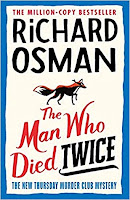
Richard Osman, The Man Who Died Twice

I read The Thursday Murder Club last month, and here's it's sequel.  Just as good.  It is very definely in the cozy-English-country-murder genre, so don't go for it if you want gritty realisim.  A fun read.


Currently Reading

Ray Bradbury, Fahrenheit 451


J R R Tolkien, The Children of Hurin

Like a lot of fans of Lord of the Rings, I read The Silmarillion too young, found it too difficult and was put off the wider Tolkien Legendarium.  Back then in the 1980s that, and The Book of Lost Tales, were the only readily available ways of taking the Tolkien itch further (Christopher Tolkien was churning out his History of Middle Earth, but those were out of the spending reach of a teenager).

But when Christopher published an edited version of The Children of Hurin that was a single, readble narrative (unlike his other collections of his father's works) in 2007, I went out and bought it.  Thirteen years later (and having upgraded my copy to a second-hand hardback), I'm getting around to reading it!

And it reads very well.  With all due respect to the Professors Tolkien, I do find a simple prose telling much easier and more pleasurable than alliterative verse or a collection of textual variants.


Wednesday, 20 January 2021

Books & Stuff (NS, No 10) - Reading in 2020


I know it's rather late to do a review of 2020, but I'm a rebel...

Goodreads, which I use to track these things, informs me that I read 46 books in 2020.  That's pretty good going - no doubt a result of Lockdown. By my count it's 27 fiction and 19 non-fiction, more of the latter than I expected to be honest.  For those who want the full list, I restarted a monthly round-up of all my reading in May 2020, so delve into the back-list.

In the past I tried to give my top-ten (sometimes giving separate lists for fiction and non-fiction), but I always found that tricky, so this year I'm again going to give highlights rather than shoe-horn things.

Susanna Clarke


My first book of 2020 was a re-reading of Jonathan Strange and Mr Norrell, not a small undertaking but one that I enjoyed greatly.  It rates as one of favorite books.  At the time it came out, the merger of historical writing and fanasty was quite novel.  There have been many imitators since, but not many of them have been able to carry it off: the secret is that Clarke has masterty of both genres and brought something new to each of them.  I followed it up re-reading The Ladies of Grace Adieu, a collection of short stories set in the same universe as Strange and Norrell.

Strange and Norrell came out in 2004 and Ladies in 2006; fans had been impatiently waiting for the next work since then.  It came out in September 2020.  After avoiding reviews and other publicity, I read it in November.  My initial opinion of it can be seen here.  Suffice to say, I enjoyed it: it rates as my BOOK OF  THE YEAR.

Joe Abercrombie, The Shattered Sea Trilogy

  • Half a King
  • Half the World
  • Half a War

I'm a long-standing fan of Joe Abercrombie.  This trilogy, published in 2014 and 2015, was written and marketed as 'Young Aldult Fantasy'.  I'm not quite sure what that means, perhaps there was less gore and sex than in Abercrombie's other works, but they (and other 'adult' themes) were still there.  Certainly there was no diminishment in the qualtity of his writing.

I read them in March and would certainly recommend them.

Mainly Non-Fiction in April and May

April and May saw a few non-fiction books that are worthy of notice.

William David Compton, Where No Man Has Gone Before

This is part of the Official History of the Apollo Programme produced by NASA, focussing on the science programme.  As such, it might be expected to be quite dry.  Instead, Compton does a very good, readable job of explaining how the expectations of the science community were meet, dismissed or managed in the light the limits of enginnering.  

Of particular interest is the on-going struggle over astronaut selection between those who primarily wanted the appointment of test pilots and those who wanted scientists on the moon.  Naturally, most of the hard science was planned for the latter missions, so the early cancellation of the programme saw much alteration of plans in order to get as much done as possible.

Peter Hunter Blair, The World of Bede

This is an excellent introduction to Anglo-Saxon England, religion and the life and works of Bede.

The book was first published in 1970, so I'm sure that it's been superceeded in many aspects.  But for someone who, like me only has a general knowledge of the subject, it was great.


J S Weiner, The Piltdown Forgery

This is another old book, in this case published in 1955.  The thing of note is that this is the first book-length account of the exposure of the fraud by one of those who made the initial expose in 1953.   

Again, it might be thought to be a dry subject, but the fact that my copy is a 1955 edition from the old Boots Travelling Library, shows that there was huge public interest in the case.  It makes good reading as a dectective story, a study in vanity and hubris, and for those interested in 1940s-vintage forensic techniques.
Tom Shippey, The Road to Middle-Earth

There have been libraries' worth of books written on Tolkien of course.  The advantage Shippey has is that he knows and understands the influences on Tolkien and, unlike many of us, he actually understands the philology that is at root of his creative process (from 1979 to 1996 Shippey held the Chair of English Language and Medieval English Literature at the University of Leeds that Tolkien held in the 1920s).

 
Joan Druett, In the Wake of Madness

I first got to know Joan in the 1990s, when I could lay a tenious claim to being a maritime historian.  It was therefore a great pleasure to read this, her account of a 1841 mutiny on an American whaleship in the Pacific.  It was a great scandal at the time and did much to influence Herman Melville's writings (he was serving in the whaling fleet at the time).

Joan did a great job in ferreting out contempory accounts and documents, and tells a story of brutality and racism that was glossed over at the time and since, while at the same time telling us a lot about how whaling on the far side of the world shaped New England society.

Michale Chabon, The Amazing Adventures of Kavalier and Clay

This account of Jewish boys in 1940s New York fighting Nazis through the medium of comic books is a great read.  It won the Pulitzer Prize for fiction in 2001, and deservedly so.

I'm not a comic-book fan, but this is obviously heart-felt homage to the Golden Age.


J D Davies, the Matthew Quinton Series


  • Gentlemen Captain
  • The Mountain of Gold
  • The Blast that Tears the Sea
There is a a lot of naval fiction written, a lot of it fairly bad (and like bad science fiction it always seems to come in series) so, as a rule it's not a rabbit-hole I tend to go down.  However I made an impulse buy in a charity shop of Gentleman Captain, the first book in this series.  I suppose there were two reasons: first, because by being set in the Restoration Navy, it was a different period from the usual Napoleonic or Tudor tale; and, secondly, because I was vaguely aware of Davies as a respected historian of the period.  It was enough to pique my curiosity, and worth it.  

The series follows Matthew Quinton, a member of an aristocratic Cavalier family - exiled during the Commonwealth - who return on the Restoration.  Matthew opts to join the Royal Navy and is appointed a 'Gentleman Captain'.  The series charts the (not insignificant) tensions between the 'Gentlemen' and 'Tarpaulins' - those who owe their appointment to the belief that the aristocracy are natural leaders and those survivors of Cromwell's navy who earned thier appointment through merit.

There are seven books in the series (plus two in a prequel series about Matthew's grandfather in Drake's navy): I've now read the first three (and am up to the Second Anglo-Dutch War and the Battle of Lowestoft).

Naval History

As anyone who follows this blog should know, I have an interest in naval and maritime history.  However, like many, that was initially prompted by accounts of Napoleonic Wars at sea.  Thus, apart from the obligatory books on the Armada or Samual Pepys and an interest in the exploration voyages of Anson and Cook, I hadn't read much of earlier periods.

Now one thing I was aware of from what little reading I had done, was that the Restoration was a fascinating period.  For anyone who wants proof of that, I'd point them to Claire Tomalin's outstanding biography, Samuel Pepys: The Unequalled Self.  Of course, the resolution of any civil war is bound to be tricky, but the sheer amount of intrigue and politicing during the Restoration and the Glorious Revolution is staggering.  That one of the reasons the Davies' Matthew Quinton series is such a good read.

So, I've decided to read up on the subject.  As a result in the latter half of 2020 I read a number of books on the navy in the period 1640 to 1740.  I don't think any one of them deserves pulling out for this hightlights post, but it was a significant feature of my reading in the year.

Ghost/Horror Stories 


  • Robert W Chambers, The King in Yellow
  • Arthur Conan Doyle, Tales of Unease
  • H P Lovecraft, The Case of Charles Dexter Ward
  • M R James, Collected Ghost Stories
I've never been what you can call a horror fan, but over the last year or so, I've become interested (primarily through RPGs based on the Lovecraft Mythos) enough that I read enough during 2020 for it to be worth mentioning.

All four of these books are worth recomending.  The King in Yellow is a mixed bunch, my view from May 2020 is here.  The same link gives you my take on The Tales of Unease; basically that familiarity with Sherlock Holmes makes one forget how good a writer Conan Doyle was and all the other stuff he wrote.  I've not read a great deal of Lovecraft, but if it's all of the quality of The Case of Charles Dexter Ward, I've a treat in store (sadly, from my other reading I know it's not).  For me, however, the Master is MR James.

Friday, 30 October 2020

Sundays in the Shire #1: First Thoughts


Last month Josh McCrowell published 'Under Hill, By Water' an RPG that had been gestating for a a couple of years on his blog Rise Up Comus (which I would highly recomend for a variety of good stuff).  It's a game about being a Hobbit* living a quiet, pastoral life: "Adventure! No, thank you!". 

*I use the term advisedly - 'Under Hill...' doesn't use that word of course.  'Hobbits' are the IP of the Tolkein Estate.  Still it is clear that McCrowell is talking about, and in homage to, Tolkien's creation.  These aren't the 'Halflings' that have grown out RPG culture: McCrowell explicited says "a lot of fat from dragons and/or dungeons has been trimmed off".  

As an aside to this footnote, I would point to McCrowell's excellent blog post in which he considers how one would RPG The Hobbit if the Middle-Earth IP had solely consided of that book.  It gives a nice feel of his style.

How JRRT saw his Hobbit

As the description says, "this is an OSR(ish) game that’s about living in the cozy under-hill homes of the halflings" going back to 'the source material of Tolkien and the eclectic, rustic, anachronistic little British gentry that were the center of his stories".  The adventure promised is on the level of delaing with awkward aunts and ornery goats, rather than defeating dragons.

Well, for a Hobbit-botherer like me, this sounds like fun, and luckily I know a few like-minded people.  Accordingly, last week we sat down for the first of what I hope will be many Sundays in the Shire.

The Village Map

The first step in playing is to create a Hobbit village and populate it with both PCs and NPCs.  The books suggests that this is done with all players together, in order to build relationships and family ties in at this early stage - in effect to have a Session Zero.  We didn't quite do that.  Dave and his co-GM Scarlett (aged 6) created the village beforehand.  Fortunately, Dave recorded the process and has put it up as the first episode of his new podcast My Kids Will Kill You.  You can listened to this 40min process here, which I'd advise as it gives an excellent overview.*

*And if like me, you like to shout at your podcasts, rest assured that Prof Aldridge does now know that peat-cutters cut peat (and why).

Character Sheet

Although there are some basic attributes, character-generation - like village-creation- is mainly based on a series of random tables.  Perhaps most important of these for a Hobbit is the family name, which potentially makes PCs and/or NPCs relatives (though it didn't in our case) and reference to an Ancestral Home.  Each PC begins play with a dream (the fulfilment of which is a means of acquiring XP).

In order to give a taste, here are our three PC's:-

Dolfin Tukkish

  • Occupation: Cook.  
  • Dream: To meet an elf and learn to sing one of their songs.
  • Personal complication: A great-uncle had died (but has left him a bottle of particularly nice vintage of wine in his will).  We added that the will was being contested.
  • Attributes: Dolfin rolled highly in CHA - he was 'Comely'.

Harvey Tunneler

  • Occupation: Antiquarian.
  • Dream: To steal his rival's apple-pie recipe.
  • Personal complication: One of his more unpleasant relatives is visiting.
  • Attributes:  Harvey rolled particularly badly in CHA: this meant that he had a Bad Reputation.  The player decided that he had used his knack once too often in stealing pies (this is before he rolled the Dream, which proved to be a nice tie-in).  He also rolled badly in INT, leaving him illiterate (an interesting complication for an Antiquarian!).
  • In addition, Harvey was of a 'Stock' of Hobbit that has a 'knack' - in his case the ability to manipulate something that he can see as if he had his hand on it.

Jemmy Gaggler

  • Occupation: Chandler.
  • Dream: To publish his family's geneology.
  • Personal complication: His parents are complaining that he's not living up to his full potential and wondering why he never visits (which we made into a prompt for his Dream - to show them that he did consider Family important).
  • Attributes: With a high roll in WIS, Jemmy was a 'Greensinger' and able to use more skill points in Wrangling/Woodcraft.
As can be seen, the process of character-generation provided a lot of back-story and some good plot-hooks.  In addition, for each season a Current Event, a Worrisome Thing and a Village Event are rolled.  We ended up with late, heavy snows; the fact that an elderly aunt in a neighbouring village isn't answering her letters (this Thing was allocated to Jemmy's character); and that a petition against wearing large hats to public events was going around.

There are mechanisms for skill checks, combat, and particlurly Hobbit-like activities such as Feasting (restores HP), Singing (gives inspiration) and Party-Giving (increases prestige).  I won't discuss them now as, frankly, we hardly used any in this first session.

So how did the play go?

It was fun!  Gentle fun.


We quickly established that our activities needed to revolve around meals.  Luckily there was several inns in the village and our cook friend was renowned for making the best muffins in the South March.  The only drawback was that pesky pie recipe!

And, although we did make some progress on the other Dreams, I think it's fair to say that the Pie-Quest took centre stage.  Harvey's rival turned out to be a wretched fellow called Tylo Splistening.  Activities including souring his courtship with the fearsome Walda*, who was behind the hat petition**; interaction with the local fencibles***; and orgainising a violent snowball fight between rival fraternal societies; the last as a diversion for a spot of light breaking-and-entering.

*Walda is the subject of the romantic interest of a surprising number of NPCs.  It is yet to be established why.  She may prove to be an heiress.
**Jemmy took against the petition as likely to upset his many elderly female reatives.  Jemmy is the PC I played.  Although Lobelia Sackville-Baggins is in the mix, my concept of his aunts owes a lot to P G Wodehouse.
***Who, quite properly, wear very fancy large hats.