Saturday, 23 February 2013

Recent Interesting Obits


Trevor Grills (d. 11 Feb 2013) - singer of sea shanties.
BBC 12 Feb 2013
Guardian 13 Feb 2013
Independent 14 Feb 2013


Reg Turnill

Reg Turnill (d. 12 Feb 2013) - journalist; the BBC's space man.
BBC 12 Feb 2013
Daily Telegraph 13 Feb 2013
Guardian 13 Feb 2013
Independent 18 Feb 2013

Friday, 22 February 2013

Literary Prizes

Just a note about two very different literary prizes.

File:Nebula Award logo.pngThe shortlist for the Nebula Awards 2012 has been announced.  The Nebulas are one of the oldest and best-respected awards in the Science Fiction world, and the roll-call of past winners is that of the greatest in the genre.


My old friend Joan Druett lists the contenders on her blog World of the the Written Word and very helpfully linked to those that can be read on-line.  The short stories I had a look at last night seem very good (as you'd expect).

The other shortlist is a bit of fun.  It's the Bookseller/Diagram Prize for Oddest Title of the Year.

That shortlist is
  • Was Hitler Ill? by Henrik Eberle and Hans-Joachim Neumann
  • Lofts of North America: Pigeon Lofts by Jerry Gagne
  • How to Sharpen Pencils by David Rees
  • God’s Doodle: The Life and Times of the Penis by Tom Hickman
  • Goblinproofing One’s Chicken Coop by Reginald Bakeley
  • How Tea Cosies Changed the World by Loani Prior
My favorites are Goblinproofing One’s Chicken Coop and How to Sharpen Pencils.  What are yours?  The winner is chosen by public vote, so go ahead and have your say.
 

Wednesday, 13 February 2013

Dreams of Space


The great and understated blog Dreams of Space celebrated its fourth birthday yesterday.

The subject matter is nicely summed-up in its full title: Dreams of Space - books and Ephemera.  Non-fiction children's space flight books 1945-1975.

Go and have a  look - they've got some great stuff to share with us!

Monday, 11 February 2013

Pope Benedict's Abdication


Just listening to the surprising news that Benedict XVI is to resign at the end of this month.

Although commentators will be very quick to say that there is precedent (though 600 years old) for this and it's always been an option in Canon Law, this is a very progressive step.  As they statement says "both strength in body and mind is necessary" for the job. Nobody wants to see the long deterioration before death we saw with John Paul II and Paul VI.

This is a good thing, and it's very much a case 'of only Nixon could go to China'

My prayers are with him for a peaceful retirement.


The Pope's statement to the Cardinals in Consistory:-
Dear Brothers,
I have convoked you to this Consistory, not only for the three canonisations, but also to communicate to you a decision of great importance for the life of the Church. After having repeatedly examined my conscience before God, I have come to the certainty that my strengths, due to an advanced age, are no longer suited to an adequate exercise of the Petrine ministry. I am well aware that this ministry, due to its essential spiritual nature, must be carried out not only with words and deeds, but no less with prayer and suffering. However, in today’s world, subject to so many rapid changes and shaken by questions of deep relevance for the life of faith, in order to govern the bark of Saint Peter and proclaim the Gospel, both strength of mind and body are necessary, strength which in the last few months, has deteriorated in me to the extent that I have had to recognise my incapacity to adequately fulfill the ministry entrusted to me. For this reason, and well aware of the seriousness of this act, with full freedom I declare that I renounce the ministry of Bishop of Rome, Successor of Saint Peter, entrusted to me by the Cardinals on 19 April 2005, in such a way, that as from 28 February 2013, at 20:00 hours, the See of Rome, the See of Saint Peter, will be vacant and a Conclave to elect the new Supreme Pontiff will have to be convoked by those whose competence it is.
Dear Brothers, I thank you most sincerely for all the love and work with which you have supported me in my ministry and I ask pardon for all my defects. And now, let us entrust the Holy Church to the care of Our Supreme Pastor, Our Lord Jesus Christ, and implore his holy Mother Mary, so that she may assist the Cardinal Fathers with her maternal solicitude, in electing a new Supreme Pontiff. With regard to myself, I wish to also devotedly serve the Holy Church of God in the future through a life dedicated to prayer.
From the Vatican, 10 February 2013
BENEDICTUS PP XVI

Tuesday, 5 February 2013

Atompunk Magazine Covers!

Thanks to Victoria's Boys in Red, I've come across the Pulp-O-Mizer - a very cool tool for making your own pulp magazine covers.

I've had a little play...


Monday, 4 February 2013

Agatha Christie: Security Threat

Christie's most worrying book?

Lovely story on Daily Telegraph website about the security services being worried that Agatha Christie might have breached security when she published a 1941 novel that featured a 'Major Bletchley' who 'knew everything about what was really going on in the war'.

Apparently, Christie was a friend of Dilly Knox, who headed the code-breaking at Bletchley Park.  There's a more prosaic, and amusing explanation.   Read on...

Knox came from an interesting family.  His father was Edmund Knox, the evangelical Bishop of Manchester and opponent of Ritualism in the Church of England.  His brothers were E.V. Knox, a satirist who wrote as 'Evoe' and was editor of Punch (and was father of the Booker Prize winner Penelope Fitzgerald); Wilfred was a High Churchman and became an Anglican monk; the youngest was Mgr Ronnie Knox, who converted, was a well-known Roman Catholic apologist, broadcaster and crime writer.  Both sisters, Ethel and Winifred (Lady Peck), were novelists.

Richard III Announcement

Richard III


As regular readers will know, I have been following the saga of the excavation in Leicester of what might be Richard III's remains.

Well, scientists have this morning announce that they are convinced 'beyond all reasonable doubts' that the remains are those of the king.

See
http://www.telegraph.co.uk/science/science-news/9846693/Richard-III-skeleton-is-the-king.html
http://www.bbc.co.uk/news/uk-england-leicestershire-21063882

Saturday, 2 February 2013

Books and Stuff

A [supposedly] weekly round-up of my book news.

What I've been reading....

Carried on with The Kingdom Beyond the Waves.


What I've bought....


Bruce Fogle, The Dog Owner's Manual - 30p
MRD Foot & JM Langley, MI9: Escape and Evasion, 1939-1945 - 30p
John Parker, The Gurkhas - 30p

Saturday, 12 January 2013

Projects in Hand


I'm sorry I haven't really blogged this week.  That's partly down the the fact that I was away for a few days last weekend and that there have been developments on the health/work front - Real Life does tend to get in the way sometime!

But mainly it's because I have been distracted by other projects, so I thought a few words of explanation might be in  order.

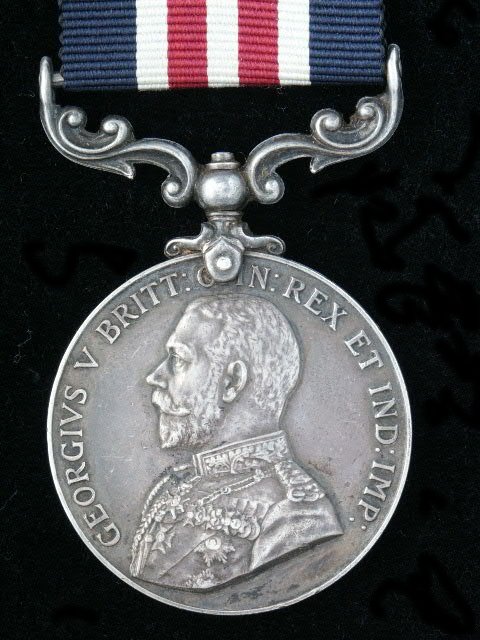
Military Medal Project

The first is a commitment I made some time ago (way back before I started this blog!) to do some drudge work to help in a book on recipients of the Military Medal that's projected to come out next year. I'd undertaken to do some collating of information from the Commonwealth War Graves Commission registers and other sources on recipients who died in World War I, and I'm afraid to say that I've been neglecting it of late. 

Thus one of my New Year resolutions was to do a certain amount of that work every day before I thought of doing other things, like blogging.

I'm half-way through the 'Gs' and have several tens of thousands to go...

Depressed Diplomatist or Citizen Scientist?


Those who know me, or who have read between the lines of this blog, know that I have an interest in the planets of the Solar System, especially Mars.

An interesting project to map Mars has come up this week.  This is Planet Four, which is asking ordinary people to give some time to look at and classify photos of the southern polar region.  The idea is that thousands of people doing a little each can achieve more than a handful of scientists (and it's not a process that can be easily automated).

This Citizen Scientist project is from the Zooniverse stable, which has several projects on the go.  These range from astronomy (deep space, Mars and the Moon), to nature (whales, bats and the ocean floor), to the humanities (looking at ancient papyri).

In the past I've been involved in a climate project, transcribing WWI-era ships' logs to use as raw data in plotting weather patterns.  Of course, that has a spin-off for naval enthusiasts like myself, and I'm glad to say that the transcripts are now becoming available on naval-history.net

Hostages to Fortune

But I am committed to this blog, so to force me to actually do something, I'll make some rash promises about what you'll see in the near future...

I have in hand a draft of a profile of Sir William Goodenough, who was probably the RN admiral who saw most action in WWI.  After that, aware that I've lost the original concept of the Monday Moustaches by including too many admirals (Beardies?), I'll concentrate on army types to restore the balance.

I've also started drafting a post on the Order of Merit as part of the Orders of Knighthood series.  That, I suppose, should be partnered by a look at the Companions of Honour.

The next Royals in Medals will probably be Prince George and Princess Marina, the Duke and Duchess of Kent.  I haven't done anything toward this yet.

Over to You...

Oddly enough this neglect on my part has been matched by a peak in visitor numbers.  I'm interested in feedback.  What brought you here?  Do you come back regularly?  What do you like/dislike about the blog?  What would you like to see here? 

Bear in mind this is my blog, and I'm not going to go off in any radical new directions!

Friday, 11 January 2013

Books and Stuff

A weekly round-up of my book news.

What I've read...

Carried on with Barbarian Eye.

Finished Life Class, read Nevil Shute, Ruined City and started Stephen Hunt, The Kingdom Beyond the Waves.


What I've bought...

Julia Child, My Life in France - £8.02
Peter Galloway, The Most Illustrious Order: The Order of St Patrick and its Knights - £16.50
Neil Hanson, The Unknown Soldier: The Story of the Missing of the Great War - £2.00
Richard Holmes, Redcoat: The British Soldier in the Age of Horse and Musket - £2.00
John Frayn Turner, VCs of the Royal Navy - £3.50


Saturday, 5 January 2013

This Week's Interesting Obits


Harry Carey Jr (d. Dec 2012).  American actor.
Guardian, 30 Dec 2012


Alfie Fripp (d. 3 Jan 2013).  Longest serving RAF PoW.
BBC, 3 Jan 2013


Con Shiels  (d. 26 Dec 2012).  Last surviving member of the Jarrow March
BBC, 3 Jan 2013

Thursday, 3 January 2013

You Read It Here First!

A mere days after my profile of Dean Stanley mentioned that in 1862 he escorted the then Prince of Wales on a trip to the Middle East, the Daily Telegraph has printed a photo of the party in Egypt.

I can't find it in the on-line issue to point you to, but it can be seen here at the Royal Collection's website.

The photo is going to be part of an exhibition 'Cairo to Constantinople: Early Photographs of the Middle East' at the Queen's Gallery, Palace of Holyrood, Edinburgh, from 8 March.  A press release can be read here.

An Apology

I'm sorry not to have posted as frequently this week as usual.  The disruption caused the holidays has lasted longer than I anticipated.

Hopefully, things will normalise after the weekend.


Books and Stuff

A weekly round-up of my book news.

What I've been reading...

Carried on with Life Class.

Started Priscilla Napier, Barbarian Eye: Lord Napier in China, 1834.


What I've bought...

Stephen Fry, Making History -70p
Elmore Leonard, Glitz - 75p


Sunday, 30 December 2012

Arthur Penrhyn Stanley

http://static.westminster-abbey.org/assets/thumbnail/0009/48168/Stanley,-Dean-portrait-72-Westminster-Abbey-copyright-photo.jpg
The Very Revd Arthur Penrhyn Stanley, Dean of Westminster

Back in November when I profiled Bishop Stanley of Norwich and his family, I promised to blog separately on his son, Dean Stanley.  Here were go...

Arthur Penrhyn Stanley was born on 13 December 1815 at Alderley rectory in Cheshire where his father Edward was then rector (he later became Bishop of Norwich). His mother was Catherine Leycester, daughter of another clergyman. Arthur was educated at Rugby School, where he came under the influence of the headmaster Thomas Arnold, and is supposed to have influenced the character George Arthur in Tom Brown's Schooldays.

Arthur Penrhyn Stanley, by Lewis Carroll (Charles Lutwidge Dodgson), circa 1852-1860 - NPG  - © National Portrait Gallery, London
Stanley photographed in the 1850s by
Charles Lutwidge Dodgson (Lewis Carroll)
He went up to Balliol College in 1834, where he was a contemporary of Benjamin Jowett, and in 1839 was elected a Fellow of University College.  He was ordained the same year.  He was an opponent of the Tractarians, then at the height of their powers in Oxford, and took a position in support of the liberal RD Hampden in the controversy that followed his appointment as Regius Professor of Divinity and, later, Bishop of Hereford.  However, he argued in Convocation against the condemnation of Tract XC, and was seen a the leader of the Broad Church movement following Arnold's death in  1842.  He published a best-selling biography of Arnold in  1844.

He was appointed secretary of the Royal Commission on University Reform in 1850, where he came to the attention of the Prince Consort, and a Canon of Canterbury Cathedral in 1851.  In 1852 Stanley travelled to Egypt and Palestine, and produced a popular account of his observations, Sinai and Palestine in Connection with Their History.  In 1862 he was chosen to accompany the Prince of Wales on his tour of the Holy Land.  He remained interested in the historical and archaeological study of the area, and in 1865 was one of the founders of the Palestine Exploration Fund.

In 1856 he was appointed Regius Professor of Ecclesiatical History at Oxford, which came with a canonry of Christ Church.  In this role he continued to further his erastian views - that the State had every right, and the duty, to legislate on matters of Church doctrine and discipline.
http://static.westminster-abbey.org/assets/thumbnail/0010/48169/Stanley,-Lady-Augusta-photo-72-1.jpg
Lady Augusta Stanley

On 22 December 1863 in Westminster Abbey he married Lady Augusta Bruce, daughter of the 7th Earl of Elgin (the one who sold the Parthanon Marbles to the British Government) and sister of the Viceroy of Egypt.  As a woman of the bedchamber to Queen Victoria, she was an intimate of the queen, and Stanley's position was further established.

Stanley's name was put forward for the vacant Archbishopric of Dublin, but his views were not acceptable to a conservative church on the brink of disestablishment, so RC Trench, Dean of Westminister was appointed instead. Stanley took Trench's places, and in January 1864 was installed at Westminster.  Here, at the centre of the establishment, Stanley's influence on public life reached a peak.  He tried to make the Abbey a national shrine for all, irrespective of creed. In doing so, he caused some controversy, such as when he invited all the scholars who had produced the Revisised Version of the Bible, including a Unitarian, to receive Communion in the Abbey

Lady Augusta died in 1876 after an illness lasting several years. Stanley died at Westminster on 18 July 1881 and was buried with his wife. They had no children.

http://static.westminster-abbey.org/assets/thumbnail/0008/48167/Stanley,-Dean-mt-72-WEstminster-Abbey-copyright-photo.jpg
Dean Stanley's tomb in Westminster Abbey

Friday, 28 December 2012

Books and Stuff

A weekly round-up of my book news (except that today, it covers two weeks).

What I've been reading...

I finished Patrick Moore on Mars and read Julie Summers and Brian Haris, Remembered: The History of the Commonwealth War Graves Commission.

Carried on reading Life Class.


What Father Christmas brought me...

Julie Summers & Brian Haris, Remembered: The History of the Commonwealth War Graves Commission.
Hiliary Mantel, Bring Up the Bodies


Back bloggin'...


I'm back after a short off-line break for Christmas.


 Normal service will resume shortly...

Thursday, 20 December 2012

Royals in Medals #10: Queen Elizabeth, the Queen Mother

Queen Elizabeth, the Queen Mother, by Cecil Beaton, 1939 - NPG  - © V&A Images
HM Queen Elizabeth, the Queen Mother
by Cecil Beaton, 1939

Elizabeth Angela Marguerite Bowes-Lyon was born on 4 August 1900, the fourth daughter and ninth child of Lord Glamis (later 14th Earl of Strathmore and Kinghorn) and his wife Cecilia Cavendish-Bentinck.  She spent he childhood in the ancestral home, Glamis Castle (the home of Macbeth), and in London.

The First World War started on her 14th birthday.  Four of her brothers served in the army; one, Fergus, being killed and another becoming a prisoner of war.  Glamis Castle was used as a convalescent home for wounded soldiers, and the young Lady Elizabeth assisted with welfare work.

The Duke and Duchess of York
The Strathmore's were associates of the Royal Family.  In 1922, Lady Elizabeth was a bridesmaid at the wedding of Princess Mary, the only daughter of King George and Queen Mary.  The following January it was announced that she was engaged to the Duke of York (Prince Albert Frederick Arthur George), their second son. The Duke (known as 'Bertie') had proposed to Elizabeth at least twice but she refused, having reservations about royal life.  Queen Mary, however, was a supporter of the idea, and worked behind the scenes to ensure it went ahead.  The  wedding took place on 26 April 1923 in Westminster Abbey.  Elizabeth became Her Royal Highness The Duchess of York.

The couple had two children, Princess Elizabeth Alexandra Mary (later Queen Elizabeth II), born on 21 April 1926 and Princess Margaret Rose, born on 21 August 1930.

As George V's reign drew to a close, questions began to be asked about the suitability of the Prince of Wales to be king.  George himself  is said to have preferred the idea of succession in the York line, and to have commented that 'I pray God that my eldest son will never marry and that nothing will come between Bertie and Lilibet and the throne'.

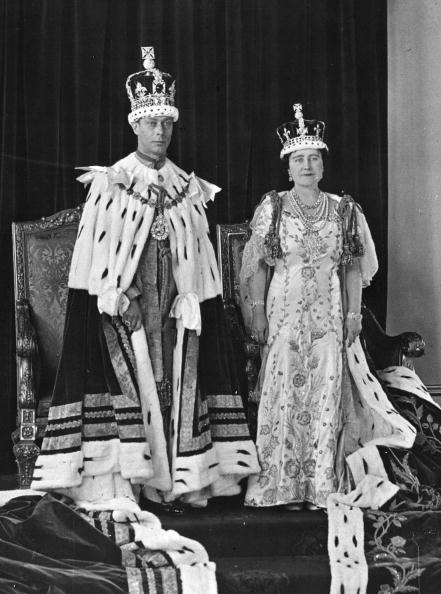
Coronation  portrait, May 1937
George died on 20 January 1936 and Edward ascended to the throne as King Edward VII.  Edward's wish to marry the divorcee Wallis Simpson led to a constitutional crisis, and his attempts to do so while remaining King were opposed by the Prime Minister, Stanley Baldwin, and the Church of England.  Accordingly, after a reign of just 327 days, Edward abdicated on 10 December 1936 and the Duke of York became King, taking the regnal name of George VI.  Elizabeth never forgave Edward for thrusting her husband to the fore, which she believed shortened his life.

On their coronation on 12 May 1937, Elizabeth became the first British-born Queen Consort since Tudor times and the last Empress of India.

On the outbreak of war in September 1939, the royal family became a symbol of the country's defiance.  Queen Elizabeth resisted proposals that she and the princess be evacuated to the safety of Canada or another colony: 'The children won't go without me. I won't leave the King. And the King will never leave.'   In September 1940 Buckingham Palace was hit by bombs, and the Queen remarked that she could now look the East End of London in the face when she and her husband made one of their many visits to Blitzed areas.

Worn out by the pressures of wartime rule and suffering from cancer after a lifetime's smoking, George VI died at his Norfolk home, Sandringham House, on 6 February 1952.  He was succeeded by his daughter, the current Queen, and Elizabeth began her long period of widowhood, taking the title Queen Mother.  She carried on with public duties, including many tips overseas, until well into her 70s.

In retirement, Elizabeth enjoyed her hobbies of fly-fishing and horse-racing.  She also refurbished Glamis Castle and was a discerning (if discrete) art collector - her extravagent lifestyle led to a large overdraft with the royal bankers.  She was consistently popular with the public - even escaping the backlash against the Windsors following the death of Diana, Princess of Wales.

Queen Elizabeth died on 30 March 2002, six weeks after attending the funeral of her youngest daughter, Princess Margaret.  At 101, she was the longest-lived member of the royal family in history; a record she held until the following year, when she was overtaken by Princess Alice, the Duchess of Gloucester.  She lay in state at Westminster Hall for three days before a funeral in Westminster Abbey, and was buried in St George's Chapel, Windsor, alongside her husband.

The Prince of Wales stands vigil at his grandmother's lying-in-state


Honorary Military Appointments


United Kingdom
  • Colonel-in-Chief of the King's Own Yorkshire Light Infantry (1927-1968)
  • Honorary Colonel the Hertfordshire Regiment (1930-1961)
  • Colonel-in-Chief of the Queen's Bays (2nd Dragoon Guards) (1930-1959)
  • Royal Honorary Colonel, The London Scottish (1935-2002)
  • Colonel-in-Chief of the Black Watch (Royal Highland Regiment) (1937-2002)
  • Colonel-in-Chief of the 7th (Queen's Own) Hussars (1947-1958)
  • Colonel-in-Chief of the Bedfordshire and Hertfordshire Regiment (1947-2002)
  • Colonel-in-Chief of the Manchester Regiment (1947-2002)
  • Commandant-in-Chief of the Women's Royal Army Corps (1949-2002)
  • Royal Honorary Colonel of the City of London Yeomanry (Rough Riders) (1952-2002)
  • Colonel-in-Chief of the 9th Queen's Royal Lancers (1953-2002)
  • Colonel-in-Chief of the Royal Army Medical Corps (1942-2002)
  • Colonel-in-Chief of the Inns of Court Regiment (1957-1961)
  • Colonel-in-Chief of the 3rd East Anglian Regiment (1958-2002)
  • Royal Honorary Colonel of the University of London OTC (1958-2002)
  • Colonel-in-Chief of the King's Regiment (1958-2002)
  • Colonel-in-Chief of the Queen's Own Hussars (1958-2002)
  • Colonel-in-Chief of the 1st The Queen's Dragoon Guards (1959-2002)
  • Colonel-in-Chief of the 9th/12th Royal Lancers (Prince of Wales's) (1960-2002)
  • Royal Honorary Colonel of the Bedfordshire and Hertfordshire Regiment (1961-2002)
  • Royal Honorary Colonel of the Inns of Court and City Yeomanry (1961-2002)
  • Colonel-in-Chief of the Royal Anglian Regiment (1964-2002)
  • Royal Honorary Colonel of the Royal Yeomanry (1967-2002)
  • Colonel-in-Chief of the Light Infantry (1968-2002)
  • Colonel-in-Chief of the Queen's Own Hussars (The Queen's Own and Royal Irish) (1993-2002)
  • Royal Honorary Colonel of the King's Own Yorkshire Yeomanry (Light Infantry) (1996-2002)
  • Commandant-in-Chief of the Women's Royal Air Force, (1949-1994)
  • Commandant-in-Chief of the RAF Central Flying School (1960-20020
  • Commandant-in-Chief of the Women, Royal Air Force (1994-2002)
Australia
  • Colonel-in-Chief of the Royal Australian Army Medical Corps (1953-2002)
Canada
  • Colonel-in-Chief of the Toronto Scottish Regiment (Queen Elizabeth the Queen Mother's Own) (1938-2002)
  • Colonel-in-Chief of the Black Watch (Royal Highland Regiment) of Canada (1947-2002)
  • Colonel-in-Chief of the Royal Canadian Army Medical Corps (1953-1974)
  • Colonel-in-Chief of the Canadian Forces Medical Service (1977-2002)
New Zealand
  • Colonel-in-Chief of the Royal New Zealand Army Medical Corps (1977-2002)
South Africa
  • Colonel-in-Chief of the Witwatersrand Rifles (1947-1961)
  • Colonel-in-Chief of the Queen's Own Cape Town Highlanders (1947-1961)
  • Colonel-in-Chief of the Transvaal Scottish (1956-1961)
Southern Rhodesia
  • Honorary Commissioner of the British South Africa Police (1955-1965)

Wearing the insignia of the Order of the Garter.
As a lady she wears the garter on her arm

Orders, Decorations and Medals

Orders


Order of the Garter
Royal Lady (LG), 1936
Order of the Thistle
Lady (LT), 1937
Queen Elizabeth was the first female member of the order.


Grand Cross: Star
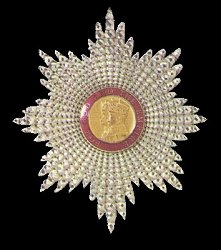
Order of the British Empire
Dame Grand Cross (GBE), 1927
gb_ordre_victoria_etoile
Royal Victorian Order
Dame Grand Cross (GCVO), 1937, and Grand Master, 1937-2002


Venerable Order of St John of Jerusalem
Dame Grand Cross (DGStJ), 1926


Order of the Crown of India
Companion (CI), 1931
Queen Elizabeth, the Queen Mother, by Dorothy Wilding, 1937 - NPG  - © William Hustler and Georgina Hustler / National Portrait Gallery, LondonRoyal Family Order of King George V
1923


Royal Family Order of King George VI
1937


Royal Family Order of Queen Elizabeth II
1952


Commonwealth Orders

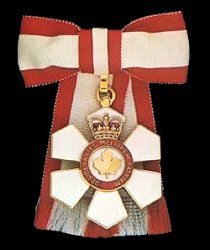
Officer - female insignia Canada.  Order of Canada
Honorary Companion (CC), 2000


New Zealand. Order of New Zealand
Additional Member (ONZ), 1990


Decorations


Royal Victorian Chain
1937


Royal Red Cross (RRC), 1936


Canadian Forces Decoration, Elizabeth II issue, attributed

Canadian Forces Decoration (CD) and five bars


Commemorative Medals

GeorgeVSilverJubileum-ribbon.png   King George V Silver Jubilee Medal, 1935
File:GeorgeVICoronationRibbon.png King George VI Coronation Medal, 1937
Queen Elizabeth II Coronation Medal 1953  
File:Queen Elizabeth II Silver Jubilee Medal ribbon.png  Queen Elizabeth II Silver Jubilee Medal 1977

Foreign Awards

Wednesday, 19 December 2012

A New Index

The eagle-eyed among you will see that there is a new entry on the list of indexes to the right of the page.  

This a a link to a page British Orders of Knighthood.  This page will serve as an index and link page to blogs I shall make on British orders.  The links will become live once the posts are made - so far we have the following:-

Knight Grand Commander: Star The Most Exalted Order of the Star of India


united-kingdom462
The Most Eminent Order of the Indian Empire


The Imperial Order of the Crown of India


Edward VII: Obverse

The Royal Family Orders


Royal Order of Victoria and Albert