Showing posts with label Apollo Programme. Show all posts

Tuesday, 30 August 2022

Books & Stuff (NS, No 31) - Reading in Aug 2022


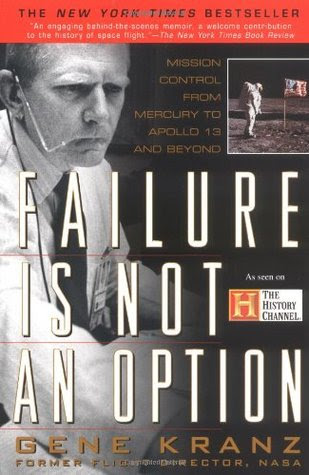
Gene Kranz, Failure is Not an Option

Kranz's autobiographical account as his time as flight director at NASA Mission Control Center during the Mercury, Gemini and Apollo programmes.

A very good and readable narative.

Matt Pritchett, The Best of Matt 2020

Perhaps it's cheating to include this on the list, but I don't care.  I'm a big fan of Matt, and here he tackles 2020 - a year that needed and damn big injection of humour.
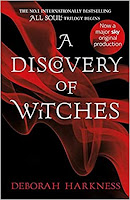
Deborah Harkness, A Discovery of Witches

I picked this up on a whim, quite prepared to hate it after the first chapter, but was swept along.  Witch falls in love with vampire while researching at the Bodleian (I know, I know...).

First book in the All Souls trilogy.


Wednesday, 20 July 2022

International Moon Day 2022

Today - 20 July 2022 - is the is the 53rd anniversary of the first crewed landing on the moon - official touchdown time was 20:17:39 UTC.
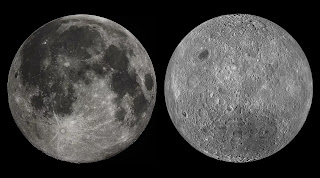
NASA LRO / Jatan Mehta photo

Last year the United Nations declared that 20 July would be recognised as International Moon Day.  To be honest, Moon Day hasn't made much of an impact - even Wikipedia doesn't have an entry for it.

The Apollo Programme was a huge undertaking, from it's inception in 1960 (during the Eisenhower administration), it took only nine years to reach to goal of landing a person on the moon - mainly due, of course, to its adoption by President Kennedy as his flagship programme to demonstrate US technological superiority over the Soviet Union.  Starting with Apollo 7 in 1968 and culminating with Apollo 17 in 1972, NASA launched 33 astronauts on 11 Apollo missions. Twelve humans walked on the Moon.  That the programme petered out there, was due to the fact that this was overall a political and not a scientific endeavour and that once the 'flags and footprints' were done, that political interest deminished.

My namesake, Buzz Aldrin, on the Moon
NASA photo

Sadly, the massive effort to get Apollo done created an areospace-industry complex that saw NASA as a milk cow.  The efforts of this industry and its tools in Congress have blighted space exploration ever since, and continue to do so.  Nevertheless, lunar exploration continues.

Lunar rover Yutu-2
Chinese National Space Agency (CNSA) and
 Chinese Academy of Sciences (CAS) photo

For anyone interested in the history of the programme, I'll point to a post I made back in March of last year, in which I highlighted two podcasts - the BBC's 13 Minutes to the Moon and the Planetary Society's A Political History of Apollo.  Both are excellent and informative listening.

How will I celebrate Moon Day?  Other than writing one of my increasingly rare blog posts, I don't know.  I'll wander out tonight and look up at the sky - I fondly remember lying on the grass on a warm summers day in 1989 marking the 20th anniversary of the landing, and being struck by the sheer beauty of the moon.

I still have that pile of books I bought in April to read, but quite frankly, I find the biographies of astronauts to the the least interesting aspect of the Apollo Programme.  I'm off to listen the the Political History podcast linked to above, which has some insightful thinks to say.

Saturday, 9 April 2022

Books & Stuff (NS, No 27) - Apollo Astronauts

 While out scouting for books the other week, I came across the following: - 


A selection of biographies of people connected with the Apollo Programme.  Quite a haul.  I may have an 'Apollo reading month' soon.

The only problem is that I don't have any room for them on the shelves devoted to space exploration.  Some juggling is going to be required.


Saturday, 13 March 2021

A Couple of Podcasts on the Apollo Programme


As I posted the other day, I've decided that this March my reading should be themed around Mars.  This was because of the various missions arriving at the planet in Feb/Mar 2021.  I'll post about that reading in my usual end-of-month summary.

But it's 2021 and even I don't just get my info from the printed page.  So, I've spent some time on digital resources and looking for podcasts.  I want to flag a couple - I won't link to them, as you'll want to find them in your favorite podcast-supplier-thing.

The first is Planetary Radio: Space Exploration, Astronomy and Science, a weekly show put out by the (American) Planetary Society.  But that doesn't just cover Mars of course.

Several episodes first broadcast in 2019 (which, of course, was the 50th anniversary of the landing on the moon) have been grouped together as a sub-podcast, A Political History of Apollo.  These five episodes (ranging from about 50mins to about 90mins) make very interesting listening, and are the reason for this post.  As the title suggests they take a very different approach to what the presenter terms the 'usual flags and footsteps' story.  They cover why the programme was set up in the first place, what the contemporary views of it were (even at its peak, under 50% of Americans supported the expenditure), why it was cancelled and where that left NASA.  There is also an excellent episode on the Soviet Space programme which completely revises what I thought I knew of it.

And if I'm plugging Apollo podcasts, I must mention a BBC World Service production 13 Minutes to the Moon.  The first season (also originally broadcast for the 50th anniversary) covers Apollo 11 and the build-up to it.  The second season (from 2020) focused on the Apollo 13 crisis. Both rely heavilly on NASA's oral history programme, but also include new interviews and first-hand accounts.