Showing posts with label RAF. Show all posts

Wednesday, 11 May 2022

Books & Stuff (NS, No 28) - Reading in Apr 2022


Books Finished

Andrzej Sapkowski, The Last Wish

Stories about Geralt the Witcher, the character who 'inspired the cult videogame' and subsequent tv series.  As I've never played the game and haven't watched the programme, I came into this one cold.
I enjoyed it.  It's good fantasy.  As everyone probably knows, Sapkowski (a Pole) draws heavily on Central European folklore (but with some cunning nods to people like me, who only know it through the filters of the Brothers Grimm and Disney), which is refreshing.  I also detect the influence of Fritz Leiber in some of the sly humour.

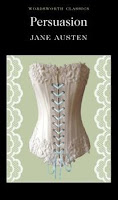
Jane Austen, Persuasion

Like most people I'm pretty familiar with Austen's works because of the many tv and film adaptaions of them.  Until now, however, I've never read any.  I started therefore with one of my favorites (and one of the shortest).

Austen writes comedies of manners, and this is another book with some sly humour.

Persuasion is the story of Ann Eliott, who several years before the book started, was persuaded that she shouldn't accept the proposal of a young naval officer.  The book follows their re-acquaintance and the persuasion of mutual love.

I find what Wordsworth was doing with the cover ironic - they're using the science of persuasion and following the old advertising adage: "Sex Sells!" in a rather silly and pointless way.

T H White, Mistress Masham's Repose

A childrens' story in which the orphaned and oppressed scion of a ducal family finds a colony of Lilliputians living in the grounds.

There's quite a lot of talk about political economy and self-determination, but when T H White riffs on an idea by Jonathan Swift, what can one expect?
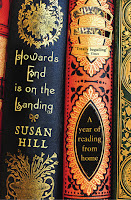
Susan Hill, Howards End is on the Landing

The conceit of this book is that Hill was looking for a book (presumably Howards End) on her shelves, but instead found so many others that she wanted to read, that she decided to have a year in which she only read books that she already owned.  Of course, this being Susan Hill, she had a couple of hundred thousand to choose from...

And it isn't really about the books, but the memories that they prompt.  Given that Hill has met every major British writer from E M Forster and the Sitwells onwards, threre's a lot of memories to fit in the 'slim volume'.  

It's quite engaging though, and I'm tempted to seek out some of Hill's own fiction.
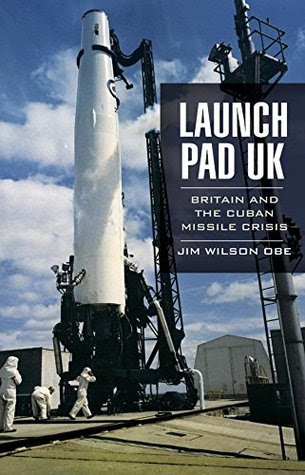
Jim Wilson, Launch Pad UK: Britain and the Cuban Missile Crisis

A change of pace here.  

I'll link to a full reveiw of this book in a few days.


Sunday, 7 September 2014

This Week's Obits of Interest


Werner Franz (d Aug 2014)
Probably the last surviving crew member from the Hindenburg disaster
Independent obit, 3 Sep 2014


Andrew V McLaglan (d. 30 Aug 2014)
Hollywood film director
Guardian obit, 4 Sep 2014
Independent obit, 6 Sep 2014


W/Cdr Ken Rees (d. 30 Aug 2014)
'Great Escaper'
Independent obit, 7 Sep 2014

Joan Rivers (d. 4 Sep 2014)
Comedienne
Guardian obit, 4 Sep 2014
Independent obit, 5 Sep 2014


Shamus Wade (d. 13 Aug 2014)
Toy Soldier Dealer

John Walker (d. 28 Aug 2014)
USN Warrant Officer and Russian Spy
Independent obit, 2 Sep 2014


Saturday, 21 December 2013

This Week's Interesting Obits

Kenneth Eager (d. 22 Sep 2013)
Stone-carver
Daily Telegraph obit 16 Dec 2013


W/Cdr Jimmy Flint DFC, GM, DFM, AE (d. 16 Dec 2013)
RAF pilot awarded the George Medal
Nottingham Post obit 17 Dec 2013
Daily Telegraph obit 20 Dec 2013
Times obit 20 Dec 2013 (no link available)


Saturday, 5 January 2013

This Week's Interesting Obits


Harry Carey Jr (d. Dec 2012).  American actor.
Guardian, 30 Dec 2012


Alfie Fripp (d. 3 Jan 2013).  Longest serving RAF PoW.
BBC, 3 Jan 2013


Con Shiels  (d. 26 Dec 2012).  Last surviving member of the Jarrow March
BBC, 3 Jan 2013

Saturday, 8 September 2012

Air Vice-Marshal F.D. 'Hawk Eyes' Hughes

Back when I blogged about Spink's  Bentley Priory Battle of Britain Trust Appeal Charity Auction.  I discussed 'Cat's Eyes' Cunningham, and used the following illustration.


Not 'Cat's Eyes' Cuningham's medal group

Well, of course, it's not Cunningham's group.  In the words of Spink (their punctuation, I assure you!) it is
The Important and Outstanding C.B., C.B.E., Second War D.S.O., D.F.C. and Two Bars, Post-War A.F.C. Group of Ten to Air Vice-Marshal F. D. 'Hawk Eyes' Hughes, Royal Air Force, Who Claimed His First Victories in Defiants During the Battle of Britain, and Added to His Score in Beaufighters in the Mediterranean and as a Squadron C.O. in Mosquitos Over North-West Europe; He Finished With A Personal Score of 18 Victories.
As a Native of the Emerald Isle He Was Second Only to 'Paddy' Finucane in Confirmed Victories, and was Right On The Tail of John 'Cat's Eyes' Cunningham As The Highest-Scoring Night Fighter Ace of the Second World War.
Frederick Desmond Hughes was born on 6 June 1919 in Belfast.  He was studying at Pembroke College, Cambridge, and a member of the University Air Squadron when he was called up in September 1939.  By the end of the war he was a Wing Commander, in command of 604 (County of Middlesex) Sqn, and was offered a permanent commission.  He retired in 1974 as an Air Vice-Marshal and died on 11 January 1992.


Citation for the award of the Distinguished Flying Cross
Flying Officer Frederick Desmond HUGHES (74706), Royal Air Force Volunteer Reserve, No.264 Squadron.
Flying Officer Hughes and Sergeant Gash as pilot and air gunner respectively have participated in numerous engagements against the enemy, both by day and night. During these flights four enemy aircraft have been destroyed, of which two were shot down at night.
 
London Gazette – 18 April 1941

Citation for the award of the Bar to the Distinguished Flying Cross
Acting Squadron Leader Frederick Desmond HUGHES, DFC (74706), Royal Air Force Volunteer Reserve, No. 600 Squadron.
As pilot and observer respectively, Squadron Leader Hughes and Flying Officer Dixon have flown together on many night sorties in operations in North Africa. During these flights they have destroyed 3 enemy aircraft. Squadron Leader Hughes and Flying Officer Dixon have displayed great skill and keenness, setting a praiseworthy example.
London Gazette – 13 April 1943
 
Citation for the award of the Second Bar to the Distinguished Flying Cross
“Acting Squadron Leader Frederick Desmond HUGHES, DFC (74706), Royal Air Force Volunteer Reserve, No.600 Squadron.
Squadron Leader Hughes is a brilliant night fighter whose determined efforts have met with further successes. Since being awarded a bar to 'the Distinguished Flying Cross he has destroyed 7 enemy aircraft. His total victories number at least 16, of which 13 have been destroyed at night. Squadron Leader Hughes is a highly efficient flight commander and his meritorious, work has been reflected in the efforts of his flight which has earned notable successes.
London Gazette - 28 September 1943

Hughes was awarded the DSO in 1945 and the AFC in 1954 he was appointed CBE in 1962 and CB in 1972.

Monday, 27 August 2012

Sir Bernard Lovell


I'm playing catch-up in flagging the obit of Sir Bernard Lovell, who died on 6 August and who's obits were published immediately afterwards:-

BBC 7 August 2012 
Daily Telegraph 7 August 2012
Guardian 7 August 2012 (by Sir Fred Hoyle)
The Independent 15 August 2012

A week later the Telegraph carried a longer, more thoughtful piece about his legacy.
He was described by Sir Patrick Moore as the 'Isaac Newton of radio astronomy'.

Sir Bernard and the telescope that was eventually named after him
Bernard Lovell was born in Bristol on 13 August 1913.  Like Arthur C. Clarke and Prof Colin Pillinger he never lost his West Country burr, which in later years made him stand out in television and radio interviews.  He was educated at the University of Bristol and then joined the University of Manchester.  During the War Lovell was in charge of a team developing radar systems which enabled night fighters to locate enemy aircraft, improved the aim of bombers during night raids, and enabled Coastal Command aircraft to detect submarines surfacing under cover of darkness.

With the end of the War, he used his contacts to acquire Army-surplus mobile radar units to further his researches into cosmic rays.  There was too much interference in Manchester, so he moved the equipment to the University's Botanical Gardens at Jodrell Bank.  There he eventually scraped together funding to build the radio observatory.

Early days at Jodrell Bank
 The Telegraph obit says that
the story of Jodrell Bank could serve as a metaphor for post-war British scientific and industrial development. Built in an atmosphere of argument and recrimination over its cost, and plagued by constant union disputes and sniping press comment, it nevertheless triumphed against all the odds, contributing greatly to Britain’s scientific reputation and to our understanding of deep space.


The telescope came on-line a few months before Sputnik was launched (it was the only telescope in the Western Hemisphere capable of tracking the satellite), and Lovell soon found himself enmeshed in the Space Race and Cold War. He claimed he was the subject of a Soviet assassination attempt.

Friday, 24 August 2012

The Bentley Priory Battle of Britain Trust Appeal Charity Auction

The Spink publicity machine has kicked in for its The Bentley Priory Battle of Britain Trust Appeal Charity Auction on 6 September 2012.

The national press is focusing in on the sale of John ‘Cat’s Eyes’ Cunningham group, which include the CB, CBE, DSO, DFC and AFC.  The estimate is £60,000-80,000, but like most medal auctioneer's estimates this is likely to be an understatement - I've never understood the point of such 'teasers'.

Not 'Cat's Eyes' Cuningham's medal group - see edit


Meanwhile Spink have been tailoring their announcements to the local and regional press.  For example, the Express and Star in the West Midlands have featured the George Medal awarded to RAF Sergeant Kenneth Lythgoe,  a bomb disposal expert from Wolverhampton.

Lythgoe's group

Unusually, the sale will benefit charity.  Spink are donating their fees to the Bentley Priory Battle of Britain Trust appeal, which helps to preserve the site where Fighter Command had its HQ. The proceeds of the Cunningham lot will go towards flying scholarships for young people.

Edit - 7 Sep 2012

Oops..

I've used the wrong illustration for Cunningham's medal group. 

In addition, the estimate was £140,000.

Cunningham's real group